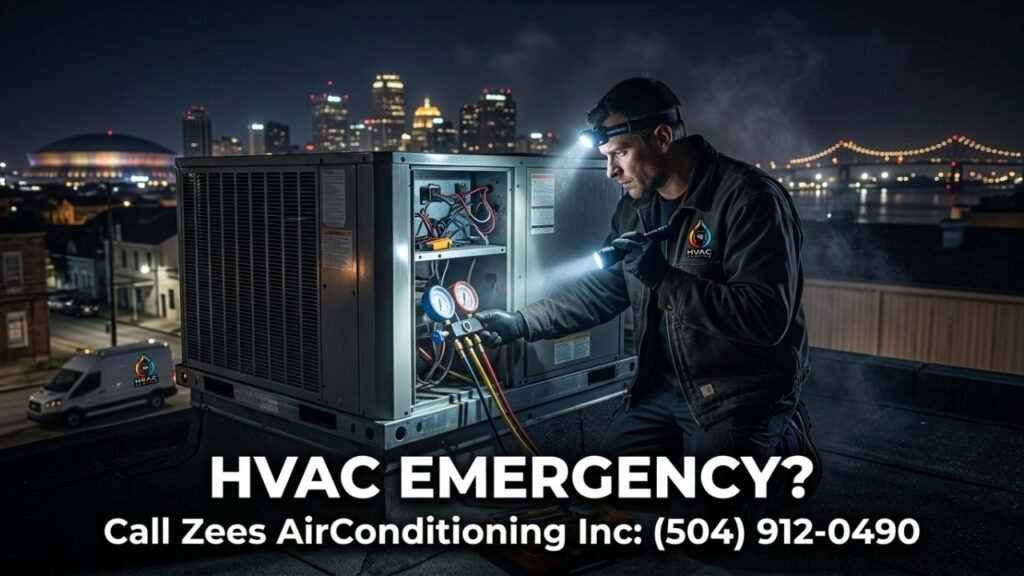
In New Orleans, where extreme heat and humidity are part of daily life, a functioning HVAC system is essential for any business. Whether you operate a restaurant, retail store, office building, or warehouse, your HVAC system directly impacts customer comfort, employee productivity, and overall operations.
When a system fails unexpectedly, it becomes more than an inconvenience—it turns into an emergency that can disrupt your business, damage your reputation, and lead to financial losses.
At Zees AirConditioning Inc, we understand how critical fast and reliable service is during these situations. This comprehensive guide explains everything business owners in New Orleans need to know about emergency commercial HVAC repair, including common causes, immediate steps to take, and how to prevent future breakdowns.
Why HVAC Emergencies Are So Common in New Orleans
Commercial HVAC systems in New Orleans operate under extreme conditions:
- Long cooling seasons with heavy daily usage
- High humidity levels that strain system components
- Frequent temperature fluctuations
- Aging infrastructure in many commercial buildings
These factors significantly increase the risk of sudden system failures, especially during peak summer months when systems are under maximum stress.
What Qualifies as an HVAC Emergency?
Not every HVAC glitch demands urgent action, but these red flags do—acting fast prevents discomfort, damage, or danger.
- Complete System Failure: Total shutdown, especially during peak hours, turns your space uncomfortable or unsafe.
- No Cooling in Extreme Heat: In New Orleans’ sweltering summers, this hits customers, staff, and equipment hard.
- Electrical Issues or Burning Smells: Signals potential fire hazards or internal faults—call pros immediately.
- Water Leaks or Drainage Problems: Leads to moisture damage, mold, and health risks if ignored.
- Poor Air Quality or Ventilation Failure: Traps stale air in commercial spaces, harming occupants.
Common Causes of Emergency HVAC Breakdowns
Spot these triggers early to avoid crises.
- Lack of Regular Maintenance: Skipped checkups let minor issues snowball into breakdowns.
- Overworked Systems: Non-stop summer operation in New Orleans wears down compressors and fans.
- Refrigerant Leaks: Drops efficiency, risking full system failure.
- Electrical Failures: Bad wiring, blown capacitors, or fried parts halt everything.
- Dirty Coils and Filters: Clogs cause overheating, freezing, or inefficiency.
- Aging Equipment: Old units falter under load and break unpredictably.
What to Do During an HVAC Emergency

When your system fails, quick action can minimize damage and downtime.
What to Do Before Help Arrives
When an HVAC emergency strikes, quick, safe actions can limit damage and keep your space operational. Follow these steps calmly.
Turn Off the System
Unusual signs like grinding noises, burning odors, or erratic performance signal potential catastrophe. Shutting down the system immediately protects components from worsening harm—think of it as hitting the emergency brake on a runaway train.
- Power it off at the thermostat first, then the main breaker if needed.
- This prevents electrical shorts, motor burnout, or refrigerant damage during malfunctions.
- In commercial settings, post signs alerting staff and customers to avoid tampering.
- Never restart until a technician inspects; forcing it on could void warranties or spark fires.
Check Basic Components
A hands-on inspection reveals simple fixes or confirms the need for pros. Always prioritize safety—wear gloves, avoid live wires, and stop if unsure.
- Thermostat: Verify settings (e.g., cooling mode at 72°F). Replace batteries if the display is blank—dead ones cause 20% of false “failures.”
- Air Filters: Pull and inspect; clogged ones (dirty after 1-3 months) starve the system of air, leading to freezes or overheat. Swap with fresh MERV 8-13 rated filters.
- Outdoor Unit: Clear debris like leaves or dirt from coils—blocked fins reduce efficiency by 30%. Hose gently if powered off; check for ice buildup in heat.
- Drain Lines: Look for standing water or leaks near the indoor unit. Pour a vinegar-water mix down the line to clear clogs, preventing overflow floods.
- Electrical Panel: Spot tripped breakers or flickering lights. Reset once only—recurring trips mean deeper wiring issues.
- Ducts and Vents: Ensure registers are open and unobstructed. Feel for weak airflow, which hints at blockages or fan failures.
Document findings with photos for the technician—they speed diagnosis and may lower service fees.
When to Consider Full System Replacement
In some cases, repairing your system may not be the best long-term solution.
Consider replacement if:
- The system is over 10–15 years old
- Repairs are frequent and costly
- Energy efficiency has significantly declined
- The system cannot meet your building’s needs
A professional evaluation can help determine the most cost-effective option for your business.
Why Businesses Choose Zees AirConditioning Inc
Zees AirConditioning Inc has become a trusted name for commercial HVAC services in New Orleans and surrounding areas.
Businesses rely on us because we provide:
- Over 10 years of experience
- Licensed HVAC professionals
- Fast and reliable emergency response
- Transparent and competitive pricing
- Comprehensive repair, installation, and maintenance services
We understand that HVAC emergencies require immediate attention, and we are committed to delivering solutions that minimize downtime and keep your business running smoothly.
Final Thoughts
Emergency commercial HVAC issues can disrupt your business, impact your customers, and lead to costly repairs if not handled quickly.
By understanding the common causes, recognizing warning signs, and acting fast, you can reduce the impact of unexpected breakdowns.
Having a reliable HVAC partner ensures that when emergencies happen, you’re prepared to handle them efficiently and effectively.
FAQs
A complete system failure, no cooling in extreme heat, electrical issues, or water leaks are considered emergencies.
Minor issues can often be fixed the same day, while major repairs may take longer depending on parts and system complexity.
Common causes include lack of maintenance, electrical issues, refrigerant leaks, and system overuse.
Yes, routine maintenance helps identify problems early and reduces the risk of unexpected breakdowns.
If the system is old and repairs are frequent or costly, replacement may be the better long-term solution.


