It’s one of the most frequent complaints we hear from homeowners across New Orleans, Gretna, Metairie, Kenner, Harvey, Marrero, and the Westbank every single summer: “Why is one room hotter than the rest of my house?” You set the thermostat to a comfortable 74°F, yet one particular bedroom, the upstairs den, or the back sunroom feels like a sauna while the rest of the home stays reasonably cool. This uneven cooling issue is incredibly common in our area and can turn daily life into a constant battle with the thermostat.
At Zees Air Conditioning Inc., we’ve diagnosed and fixed thousands of uneven cooling problems in Greater New Orleans homes. In this very detailed, comprehensive guide (over 4,200 words), we’ll explore every major reason why one room stays hotter than the rest, how our local climate makes the problem worse, how to diagnose it yourself, professional solutions that actually work, prevention strategies, real homeowner stories, and exactly when you should call for expert help.
Why Uneven Cooling Is Extremely Common in New Orleans & Gretna Homes
New Orleans and Gretna have a challenging environment for HVAC systems:
- Extreme Humidity — Often 85–95% in summer, making it harder for your AC to remove moisture evenly across the house.
- Long Cooling Season — Your system runs almost nonstop from April through October.
- Older Housing Stock — Many homes in Gretna and historic New Orleans neighborhoods were built decades ago with outdated ductwork and minimal insulation.
- Multi-Story Homes — Heat rises naturally, making upstairs rooms significantly hotter.
- Attic Temperatures — Attics can easily reach 140–160°F, baking ducts and causing massive cooling loss.
- Foundation Settling — Common in our soft soil, this pulls ducts apart over time.
These factors combine to create temperature imbalances that are far more pronounced here than in drier climates.
Top 12 Reasons One Room Is Hotter Than the Rest in New Orleans Homes

Uneven cooling is one of the most common HVAC complaints we receive from homeowners throughout New Orleans, Gretna, Metairie, Kenner, Harvey, and the Westbank. What many people don’t realize is that a single hot room is rarely random — it’s almost always caused by a specific, identifiable issue in the system. Below, we break down the top 12 reasons why one room stays hotter than the rest, with detailed explanations tailored to our local climate and housing styles.
1. Leaky or Inefficient Ductwork (The #1 Culprit) Leaky ductwork is by far the most common cause of uneven cooling we encounter in New Orleans and Gretna homes. Cooled air escapes through gaps, holes, disconnected joints, or deteriorated flexible ducts before it ever reaches certain rooms — especially those farthest from the air handler or located upstairs. In our extreme summer heat, attic temperatures can exceed 140°F, turning leaky ducts into expensive energy wasters. Many older homes in Gretna and historic New Orleans neighborhoods have flex ducts that have dried out, cracked, or pulled apart due to foundation settling and years of thermal expansion.
Symptoms include weak airflow in one or two rooms, higher energy bills, and noticeable temperature differences of 8–15°F. Left unaddressed, leaky ducts force your AC to run longer and harder, leading to premature system failure. At Zees Air Conditioning Inc., we use advanced diagnostic tools like pressure testing and smoke pencils to locate even hidden leaks, then seal them with high-grade mastic sealant or aerosol technology for long-lasting results.
2. Poor Duct Design or Long Duct Runs In many New Orleans homes, especially those expanded over the years or with additions, the original duct design is inadequate. Rooms at the very end of long duct runs naturally receive less airflow and cooler air because the air loses pressure and temperature along the way. This is particularly common in ranch-style homes with long hallways or two-story homes where upstairs rooms are at the end of the duct line.
Poor design combined with our high humidity makes the problem worse because the system has to work extra hard to dehumidify and cool distant spaces. We often solve this by installing booster fans, adding new supply runs, or redesigning sections of the duct system for better balance.
3. Blocked or Closed Supply Vents It sounds simple, but blocked supply vents are surprisingly common. Furniture, rugs, curtains, or even intentionally closed vents (to “save energy”) severely restrict airflow to specific rooms. In New Orleans homes with high ceilings or open floor plans, this creates major pressure imbalances. When one room’s vent is blocked, the system pushes more air to other areas, leaving the blocked room significantly hotter.
We always recommend keeping all supply vents fully open and unobstructed. During service calls, we check and balance the entire system to ensure proper airflow distribution.
4. Insufficient Return Air For every cubic foot of air your AC pushes out through supply vents, an equal amount must return to the air handler. Rooms without adequate return vents (or with blocked returns) develop positive pressure, making it difficult for cooled air to enter. This is extremely common in bedrooms and home offices in Gretna and New Orleans homes.
The result is stagnant, hot air that never gets properly conditioned. Solutions include adding dedicated return vents or installing jump ducts to improve circulation.
5. Low Refrigerant Levels When refrigerant is low due to a leak, your AC loses cooling capacity. Distant rooms or upstairs areas are affected first because they already receive less airflow. Low refrigerant also causes the evaporator coil to freeze, further reducing performance. In New Orleans’ humid climate, this problem escalates quickly.
Only licensed technicians can safely diagnose, repair leaks, and recharge refrigerant. Ignoring low refrigerant can lead to compressor failure — one of the most expensive repairs.
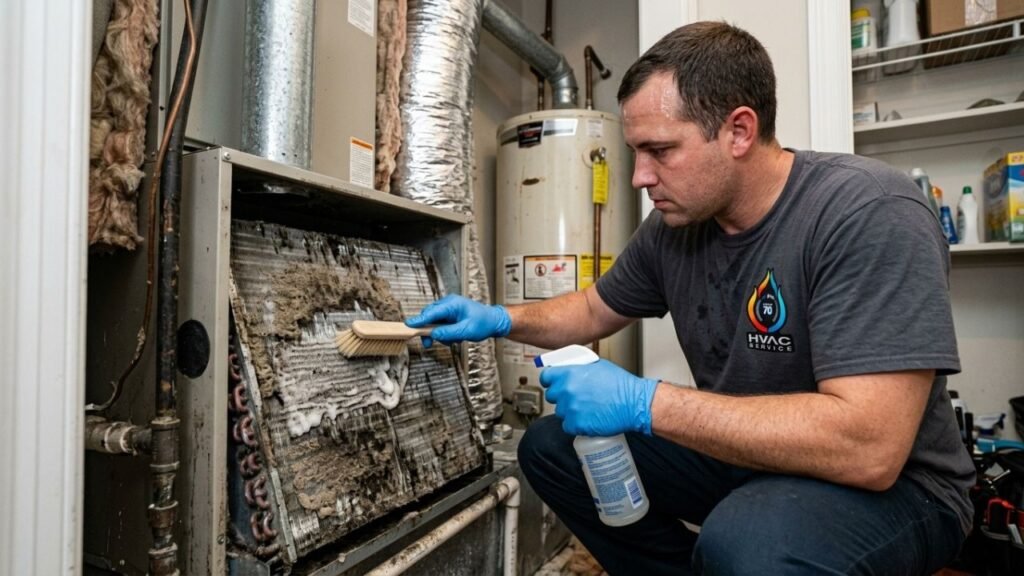
6. Dirty or Clogged Evaporator Coil The indoor evaporator coil is the heart of your cooling system. When it becomes coated with dust, dirt, and mold (very common in our humidity), heat exchange efficiency drops dramatically. Rooms with weaker airflow suffer the most. A dirty coil can reduce cooling capacity by 30% or more.
Professional coil cleaning during spring maintenance is one of the best ways to restore even cooling throughout the house.
7. Thermostat Location Problems If your thermostat is located in a cool hallway, shaded area, or near a return vent, it senses lower temperatures and shuts off the system before hotter rooms reach the set temperature. This is a frequent issue in older New Orleans homes with poor thermostat placement.
Upgrading to a smart thermostat with remote sensors is an excellent long-term solution for multi-room temperature control.
8. Inadequate Insulation Poor attic insulation, insufficient wall insulation, or missing insulation around ducts allows heat to infiltrate specific rooms more than others. In New Orleans, where attics get extremely hot, this is a major contributor to uneven cooling, especially in upstairs rooms.
Adding proper attic insulation and sealing ductwork can make a dramatic difference in temperature balance.
9. Undersized Air Conditioning System Many older homes in Gretna and New Orleans were built with AC units that were barely adequate for the square footage at the time of installation. As families add rooms, renovations, or simply live with more heat-generating appliances, the system becomes undersized and struggles to cool the entire home evenly.
A professional load calculation helps determine if your current system is properly sized for your home.
10. Blower Motor or Air Handler Issues A weak, failing, or dirty blower motor cannot push enough air through the entire duct system. Distant rooms or rooms with longer duct runs suffer the most. This problem often develops gradually and is frequently misdiagnosed as “just how the house is.”
11. Zoning System Malfunctions Homes with zoning systems (multiple thermostats and dampers) can develop issues where one zone stays hot due to stuck dampers, faulty controls, or poor calibration. While zoning is great when working properly, problems can create significant temperature imbalances.
12. Sun Exposure & Room Orientation South- and west-facing rooms naturally absorb more solar heat, especially in New Orleans’ intense summer sun. Combined with any of the above issues, these rooms can become noticeably hotter. Solutions include window tinting, better curtains, additional insulation, or dedicated supply vents.
How to Diagnose the Problem Yourself
Step-by-Step Homeowner Diagnostic Process:
- Measure Temperatures — Use a digital thermometer in each room at the same time of day.
- Check Airflow — Feel the strength and temperature of air coming from every vent.
- Inspect Visible Ducts — Look in attic or crawl space for obvious leaks or damage.
- Change Your Air Filter — A dirty filter can cause major imbalances.
- Test Different Thermostat Settings — See if the problem persists at lower temperatures.
If these steps don’t resolve the issue, professional diagnosis is recommended.
Professional Solutions Offered by Zees Air Conditioning Inc.
We provide targeted, effective fixes including:
- Comprehensive duct inspection and sealing
- Duct cleaning and airflow balancing
- Refrigerant leak detection and repair
- Insulation upgrades
- Zoning system installation and repair
- Full system performance evaluation
Schedule Professional AC Repair in New Orleans
Prevention Strategies to Maintain Even Cooling Year-Round
- Schedule professional maintenance twice per year
- Change air filters every 30 days
- Keep all supply and return vents clear
- Have your ductwork inspected every 3–5 years
- Consider adding return vents to problem rooms
- Upgrade to a variable-speed AC system
- Improve attic insulation

Real Homeowner Stories from New Orleans & Gretna
A two-story home in Gretna had a consistently hot upstairs. After we sealed major attic duct leaks and balanced the system, the temperature difference dropped from 12°F to just 2°F. Another family in Metairie solved their sunroom heat issue with targeted duct sealing and additional return air.
Cost Guide for Fixing One Hot Room
- Basic duct sealing: $1,200 – $2,800
- Duct cleaning & balancing: $750 – $1,900
- Full system evaluation & repair: $350 – $1,200
- Zoning system addition: $2,800 – $6,500
Most solutions pay for themselves within 1–3 years through energy savings and improved comfort.
Summary: One Hot Room Is Fixable
One room hotter than the rest of your house is rarely something you have to live with. In most cases, it’s a solvable issue with ductwork, airflow, insulation, or system capacity. Addressing it properly will improve comfort, lower energy bills, and extend your AC system’s life.
Zees Air Conditioning Inc. has the local expertise and tools to diagnose and permanently fix uneven cooling problems throughout New Orleans and Gretna.
Don’t suffer through another uncomfortable summer. Take action today for consistent, whole-home cooling.
Ready to solve your uneven cooling issue? Schedule Professional AC Repair in New Orleans
FAQ
Heat rises naturally, and poorly insulated attics or long duct runs make the problem worse.
Yes — this is one of the most common causes we see locally.
Costs typically range from $800 to $4,500 depending on the root cause.
Not always. Proper ductwork and airflow are often more important than just replacing the unit.
Clean filters, balance dampers, seal ducts, and consider adding return vents.
Yes. We provide fast, expert service throughout Gretna and the entire Westbank.


