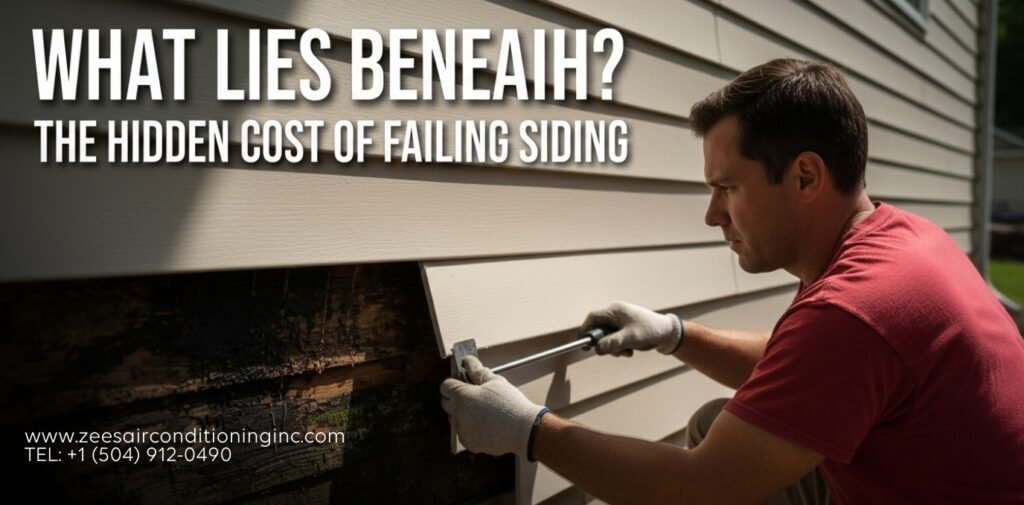
Most homeowners assume a siding inspection is just a quick walk around the house—looking for cracks, loose panels, or obvious damage. In reality, a professional siding inspection is far more detailed and technical than most people realize.
At Zees AirConditioning Inc, siding inspections are not about selling fear or pushing unnecessary replacements. They’re about understanding how your home’s exterior is performing, where it’s vulnerable, and what small issues could turn into expensive problems if ignored.
If you’ve ever wondered what professionals actually look for during a siding inspection, this guide explains it clearly—step by step.
Why Professional Siding Inspections Matter
Your siding does more than make your home look good. It acts as a protective system that shields your structure from:
- Moisture intrusion
- Temperature extremes
- Wind-driven rain
- Pests
- Long-term structural decay
When siding fails—even slightly—it often allows damage to start behind the scenes, where homeowners can’t see it.
A professional inspection is designed to catch early warning signs before they turn into costly repairs.
The Difference Between a DIY Check and a Professional Inspection
Homeowners typically notice:
- Cracks
- Missing panels
- Visible warping
Professionals go deeper and look for:
- Installation-related issues
- Moisture pathways
- Expansion and contraction stress
- Hidden separation points
- Long-term wear patterns
This difference is critical.
1. Siding Separation (One of the Most Common Issues)
One of the first things professionals look for is siding separation.
What That Really Means
Siding separation refers to:
- Gaps between panels
- Panels pulling away from trim
- Uneven alignment at seams
These gaps may look minor, but they can:
- Allow water behind siding
- Trap moisture
- Lead to rot or mold
Professionals assess whether separation is:
- Normal expansion
- Installation error
- Structural movement
2. Expansion & Contraction Stress
All siding materials expand and contract due to temperature changes.
During inspections, professionals check:
- Nail placement
- Fastener tightness
- Buckling patterns
- Panel flexibility
Improper installation often prevents siding from moving naturally, which leads to:
- Warping
- Cracking
- Permanent deformation
This is especially common in vinyl siding.
3. Moisture Intrusion Points
Moisture is siding’s biggest enemy.
Professionals inspect areas where water is most likely to enter:
- Around windows and doors
- Corner posts
- Rooflines
- Deck attachments
- Utility penetrations
They look for subtle signs like:
- Staining
- Soft spots
- Discoloration
- Swelling
Even if siding looks intact, moisture can still be getting in.
4. Flashing and Trim Integrity
Siding does not work alone—it relies on flashing and trim.
Inspectors carefully check:
- Window flashing
- Door flashing
- Kick-out flashing
- Trim boards
Missing or improperly installed flashing is a major cause of hidden damage, even in newer homes.
5. Signs of Hidden Structural Stress
Professionals are trained to spot patterns that suggest deeper problems.
They look for:
- Repeating cracks
- Uneven gaps across multiple panels
- Misaligned seams
These can indicate:
- Foundation settling
- Framing movement
- Long-term moisture exposure
This goes far beyond cosmetic concerns.
6. Surface Damage vs Functional Damage
Not all damage requires replacement.
A professional distinguishes between:
- Cosmetic wear (fading, minor scratches)
- Functional damage (loss of protection)
This helps homeowners avoid unnecessary expenses while still protecting the home.
7. Siding Material-Specific Issues
Different materials fail in different ways.
Vinyl Siding

- Buckling
- Cracking
- Improper nailing
- Heat distortion
Fiber Cement
- Hairline cracks
- Moisture absorption
- Edge deterioration
Wood Siding
- Rot
- Insect damage
- Paint failure
A professional inspection accounts for these differences.
8. Installation Quality Assessment
Many siding problems trace back to poor installation—not the material itself.
Inspectors evaluate:
- Fastener spacing
- Starter strip alignment
- Panel overlap
- Manufacturer compliance
Improper installation can shorten siding lifespan by years.
9. Weather & Environmental Impact
Professionals assess how local conditions affect siding performance.
They consider:
- Sun exposure
- Wind direction
- Tree coverage
- Rain patterns
Homes with one wall receiving more sun often show uneven aging, which inspectors factor into recommendations.
10. Pest Entry Points
Small siding gaps often become entry points for:
- Insects
- Rodents
- Birds
Inspectors look for:
- Nesting signs
- Chew marks
- Droppings
Pest intrusion often signals larger siding vulnerabilities.
11. Sealant & Caulking Conditions
Caulk doesn’t last forever.
Professionals check:
- Cracked sealant
- Shrinkage
- Improper application
Failing caulk is one of the fastest ways water enters behind siding.
12. Drainage & Water Flow Management
Good siding design encourages water to shed away from the home.
Inspectors analyze:
- Slope alignment
- Drip edges
- Water paths
Poor drainage often leads to recurring moisture problems.
13. Age & Expected Lifespan
A professional inspection always considers:
- Siding age
- Previous repairs
- Material lifespan
This helps homeowners plan maintenance vs replacement realistically.
14. Repair vs Replacement Evaluation
Not every issue requires full replacement.
Professionals explain:
- What can be repaired
- What should be replaced
- What can wait
At Zees AirConditioning Inc, the goal is practical solutions, not overselling.
15. Documentation & Recommendations
A professional inspection includes:
- Clear explanations
- Visual evidence
- Prioritized recommendations
This allows homeowners to make informed decisions.
When Homeowners Should Schedule a Siding Inspection
You should consider an inspection if:
- You see gaps or warping
- Your home is 10+ years old
- You’re preparing to sell
- After severe weather
- You notice interior moisture issues
Preventive inspections are always cheaper than repairs.
Why Homeowners Trust Zees AirConditioning Inc
At Zees AirConditioning Inc, siding inspections are:
- Honest
- Thorough
- Educational
- Solution-focused
We help homeowners understand their exterior—not fear it.
Final Thoughts
A professional siding inspection is not just about spotting damage—it’s about understanding how your home protects itself.
By identifying small issues early, you:
- Prevent costly repairs
- Extend siding lifespan
- Protect your home’s value
Knowing what professionals actually look for helps you take control of your home’s exterior health.
Thinking About a Siding Inspection?
Zees AirConditioning Inc provides professional siding inspections designed to catch problems early, explain them clearly, and recommend only what your home truly needs.
Your siding protects everything inside—make sure it’s doing its job.
FAQs
A professional siding inspection evaluates siding panels, moisture entry points, flashing, installation quality, and signs of structural stress.
Most homes should have siding inspected every 1–2 years or after severe weather.
Yes. Moisture intrusion, improper installation, and hidden gaps can occur without obvious surface damage.
No. Many siding separation issues can be repaired if caught early.
Zees AirConditioning Inc provides detailed, honest inspections focused on early detection, practical solutions, and long-term protection.


