If your air conditioner is constantly running but struggling to cool your home, you’re not alone. In the intense heat and humidity of New Orleans and Gretna, this is one of the most common HVAC complaints we hear at Zees Air Conditioning Inc. An AC that never seems to shut off wastes enormous amounts of energy, drives up your Entergy bill, and puts dangerous strain on your system that can lead to expensive breakdowns.
This comprehensive guide explains exactly why your air conditioner is constantly running in our local climate, the most common causes, warning signs, and most importantly — how to fix it before it causes major damage. Whether you live in Gretna, Terrytown, Harvey, Marrero, or anywhere in the Greater New Orleans area, this detailed resource will help you understand and resolve the issue.
Why Constant Running Is a Serious Problem in New Orleans

In a normal, healthy system, your air conditioner should cycle on and off throughout the day. Constant running (also called short cycling or never shutting off) means your system is working overtime. In New Orleans’ challenging environment — where temperatures stay high and humidity often exceeds 85% for months — this problem is amplified and can cost you hundreds of extra dollars every month.
Consequences of an AC That Won’t Stop Running:
- Dramatically higher energy bills (often 30–50% more)
- Premature wear on the compressor (the most expensive part)
- Increased risk of total system failure during peak summer
- Poor humidity control (making your home feel sticky)
- Higher chance of frozen coils and water damage
Top 10 Reasons Your Air Conditioner Is Constantly Running in New Orleans
An air conditioner that never seems to shut off is more than just annoying — it’s a clear warning sign that something is wrong with your system. In the demanding climate of New Orleans and Gretna, where high humidity and extreme heat are the norm for most of the year, constant running (also called short cycling or never cycling off) puts enormous stress on your HVAC equipment. Below, we break down the top 10 most common reasons we see at Zees Air Conditioning Inc., with detailed explanations, local context, symptoms, potential consequences, and recommended solutions.
1. Low Refrigerant Levels (One of the Most Common Causes) When refrigerant is low due to a leak, your AC loses its ability to absorb heat effectively. The system senses that the house isn’t reaching the set temperature and keeps running longer and harder in an attempt to compensate — but it never quite succeeds. This is one of the leading causes of constant running we diagnose in Gretna and New Orleans homes.
Why It’s So Common Here: Vibration from frequent thunderstorms, corrosion caused by high humidity, and aging copper refrigerant lines all contribute to small leaks that gradually worsen over time. Many homes in Gretna still have systems installed 10–20 years ago, making refrigerant leaks almost inevitable without regular maintenance.
Symptoms: Warm or barely cool air from vents, ice formation on the indoor coil or refrigerant lines, hissing or bubbling sounds, higher than normal energy bills, and the system running almost nonstop.
Consequences if Ignored: Continued low refrigerant can cause the compressor to overheat and fail — an extremely expensive repair that often leads to full system replacement.
Solution: Never attempt to add refrigerant yourself. A licensed technician must locate the leak using specialized detection equipment, repair it properly, and then recharge the system to the correct level. At Zees Air Conditioning Inc., we perform thorough leak detection during every maintenance visit to catch this issue early.
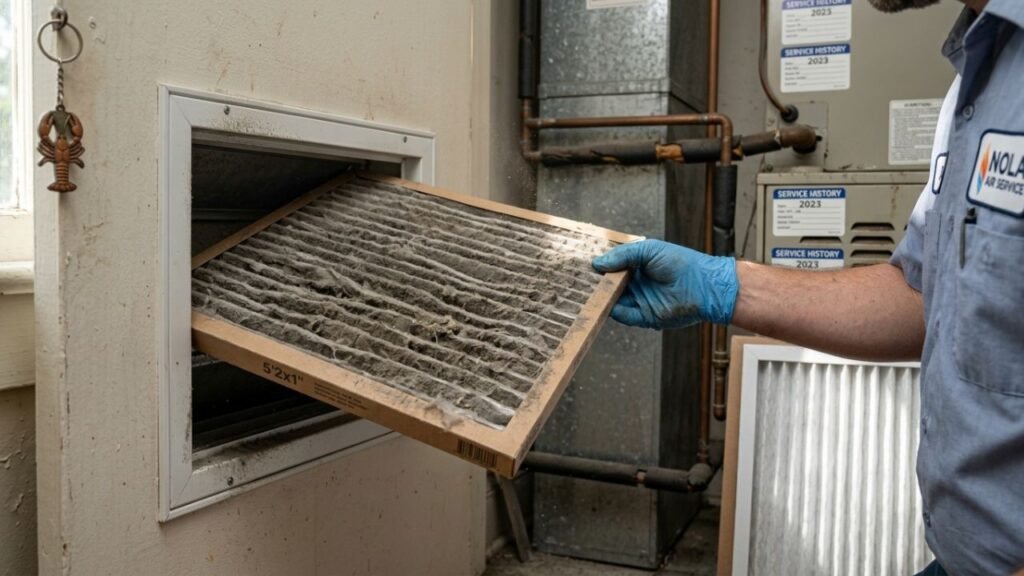
2. Dirty or Clogged Air Filter A severely restricted air filter reduces airflow so dramatically that the system cannot remove heat effectively. As a result, the AC runs nonstop trying to reach the thermostat setting but never quite cools the house properly.
Local Impact in Gretna & New Orleans: Our high pollen counts from live oaks, combined with constant humidity and dust, cause filters to become clogged extremely fast — sometimes within just 2–3 weeks instead of the usual 90 days in drier climates.
Symptoms: Noticeably weaker airflow from vents, longer run times, higher energy bills, and eventually frozen evaporator coils.
Solution: Replace the air filter immediately if it looks gray or dirty. For most Gretna and New Orleans homes, we recommend changing filters every 30 days during the cooling season. Upgrading to higher-quality pleated filters (MERV 8–11) can also make a big difference.
3. Dirty Evaporator or Condenser Coils When the indoor evaporator coil or outdoor condenser coil becomes coated with dirt, pollen, mold, and debris, heat exchange efficiency drops dramatically. The system has to run constantly to try to compensate for the reduced performance.
Why Common in Our Area: New Orleans and Gretna’s humid environment promotes rapid mold growth on coils, while heavy pollen and river-area dust accelerate buildup on the outdoor unit.
Symptoms: The system runs for hours without properly cooling the house, higher energy consumption, and ice formation on the indoor coil.
Solution: Professional coil cleaning using specialized solutions and equipment is essential. We strongly recommend having both coils professionally cleaned during spring and fall maintenance visits.
4. Thermostat Problems A faulty thermostat, incorrect programming, poor placement, or weak batteries can cause the system to run nonstop because it never accurately senses that the desired temperature has been reached.
Common in Our Area: Many older New Orleans and Gretna homes have thermostats located in hallways or near windows, where they receive false readings due to drafts or direct sunlight.
Symptoms: The AC runs constantly even when the house feels cool in some areas, or it never reaches the set temperature.
Solution: Professional thermostat calibration, battery replacement, or upgrading to a modern smart thermostat with remote sensors for better whole-home control.
5. Undersized or Oversized AC Unit An undersized unit will run constantly trying (and failing) to keep up with the cooling demand. An oversized unit can cause short cycling, but both scenarios lead to inefficiency and constant operation issues.
Solution: Have a professional perform a proper Manual J load calculation to determine if your current system is correctly sized for your home’s square footage and New Orleans climate demands.
6. Ductwork Leaks or Poor Insulation Leaky or poorly insulated ducts lose large amounts of cooled air before it reaches the rooms, forcing the system to run much longer to compensate.
Local Factor: Many Gretna homes have older flex ductwork in hot attics that has deteriorated over time. Foundation settling also pulls ducts apart at the joints.
Solution: Professional duct inspection, sealing, and insulation upgrades can dramatically reduce constant running and lower energy bills.
7. Failing Capacitor or Electrical Issues A weak or failing capacitor makes the compressor and fan motors work harder and run longer. Power surges from frequent thunderstorms commonly damage electrical components in our area.
Solution: Professional electrical diagnosis and timely replacement of capacitors and contactors.
8. Clogged Condensate Drain Line A blocked drain line can trigger safety switches that cause abnormal operation or force the system to run inefficiently.
Prevention: Regular professional drain line cleaning and maintenance.
9. Blower Motor Issues A weak, dirty, or failing blower motor cannot move enough air through the system, causing the AC to run constantly trying to achieve proper cooling.
Solution: Professional inspection, cleaning, and repair or replacement of the blower motor.
10. High Heat Load or Poor Home Insulation Homes with poor attic insulation, single-pane windows, or south/west-facing exposure absorb massive amounts of heat, forcing the AC to run nonstop.
Solution: Insulation upgrades, window tinting, and professional energy audits can significantly reduce constant running.
How to Diagnose an AC That Won’t Stop Running
Quick Homeowner Checklist:
- Check and replace the air filter
- Verify thermostat settings and batteries
- Ensure outdoor unit is clean and clear
- Listen for unusual noises
- Check for ice on indoor coils
- Feel airflow at multiple vents
If basic steps don’t help, professional diagnosis is essential.
Professional Solutions from Zees Air Conditioning Inc.
We provide fast, reliable fixes including:
- Refrigerant leak repair and recharge
- Thorough coil cleaning
- Duct sealing and balancing
- Capacitor and electrical repairs
- Thermostat upgrades
- Full system performance optimization
Schedule Professional AC Repair in New Orleans
Prevention Strategies to Stop Constant Running
- Schedule professional maintenance twice per year
- Change filters every 30 days
- Keep outdoor unit clean
- Have ducts inspected regularly
- Install a smart thermostat
- Improve home insulation where possible
Real Stories from Gretna & New Orleans Homeowners
A Gretna family’s AC ran nonstop for days, driving their bill sky high. We discovered low refrigerant and dirty coils. After repairs, their system cycled normally and bills dropped significantly. Another Metairie homeowner solved constant running with proper duct sealing.
Cost Guide for Fixing Constantly Running AC

- Filter replacement: $15 – $40
- Capacitor repair: $150 – $350
- Refrigerant leak repair: $400 – $1,200
- Coil cleaning: $250 – $650
- Duct sealing: $1,200 – $3,500
Summary: Don’t Let Your AC Run Constantly
An air conditioner that is constantly running is a clear sign something is wrong. In New Orleans and Gretna’s tough climate, ignoring it leads to higher bills and potential system failure. Early diagnosis and professional repair can save you significant money and restore comfort quickly.
Zees Air Conditioning Inc. is ready to help diagnose and fix why your AC won’t stop running.
Need expert help today? Schedule Professional AC Repair in New Orleans
FAQ
Low refrigerant, dirty coils, or restricted airflow are the most common reasons.
Yes. It wastes energy, increases wear, and can lead to major failures.
Normal cycling is 3–8 times per hour depending on outdoor temperature.
Absolutely. It’s one of the easiest and most common fixes.
Only if the new unit is properly sized and installed with good ductwork.


