Hurricane season in the Gulf Coast can put your home’s air conditioning system under serious stress. High winds, heavy rain, power outages, humidity, and flood risk all raise the chance that your AC will underperform, break down, or fail completely when you need it most. At Zees AirConditioning Inc, we help homeowners in New Orleans, Metairie, Kenner, Gretna, Marrero, Westwego, Harvey, and surrounding areas prepare their AC systems so they’re more likely to survive the storm—and keep you cool and comfortable afterward.
Taking a few simple but smart steps before the first big storm hits can greatly reduce the risk of AC breakdowns during hurricane season, shorten downtime, and keep repair costs under control.
Why AC Breakdowns Are Common During Hurricane Season

In the Gulf Coast climate, hurricane season usually overlaps with the hottest months of the year, when many homes rely heavily on air conditioning. Storms bring a unique mix of challenges for your AC:
- Heavy rain and flooding around the outdoor unit, risking water damage, rust, and electrical issues.
- High winds that can knock loose panels, throw debris into the condenser, or even damage the fan or copper lines.
- Power surges and outages that can damage the compressor, control board, and thermostat.
- Humidity and mold that can grow inside the system if water gets in or the unit sitters open and sits unused.
- Physical impact from debris, such as tree branches, patio furniture, or loose roofing material.
An AC that’s already worn out, dirty, or borderline will fail faster under these conditions than a well‑maintained system. That’s why avoiding AC breakdowns during hurricane season starts with being proactive, not waiting for a problem to appear.
Step 1: Schedule a Pre‑Season AC Inspection
The single most important thing you can do to protect your AC is to have it professionally inspected before hurricane season begins.
During a pre‑hurricane AC inspection, a technician typically:
- Checks the compressor, fan motor, and blower for wear, leaks, or loose parts.
- Tests the refrigerant level and looks for low‑charge or leaks that can stress the system.
- Inspects electrical connections, capacitors, and contactor for corrosion, burn marks, or loose wiring.
- Measures airflow and static pressure to catch duct or blower problems that increase strain.
- Verifies the thermostat and control system are working correctly.
If problems are found, they can be fixed ahead of time so your AC is in the best possible condition before a storm hits. For homeowners in New Orleans, Metairie, Kenner, Gretna, Marrero, Westwego, Harvey, this is a quick and cost‑effective way to avoid AC breakdowns during hurricane season.
Step 2: Clear and Secure the Outdoor Unit
The outdoor condenser is the most exposed part of your AC system, so it’s especially vulnerable to wind, debris, and water.
To protect it:
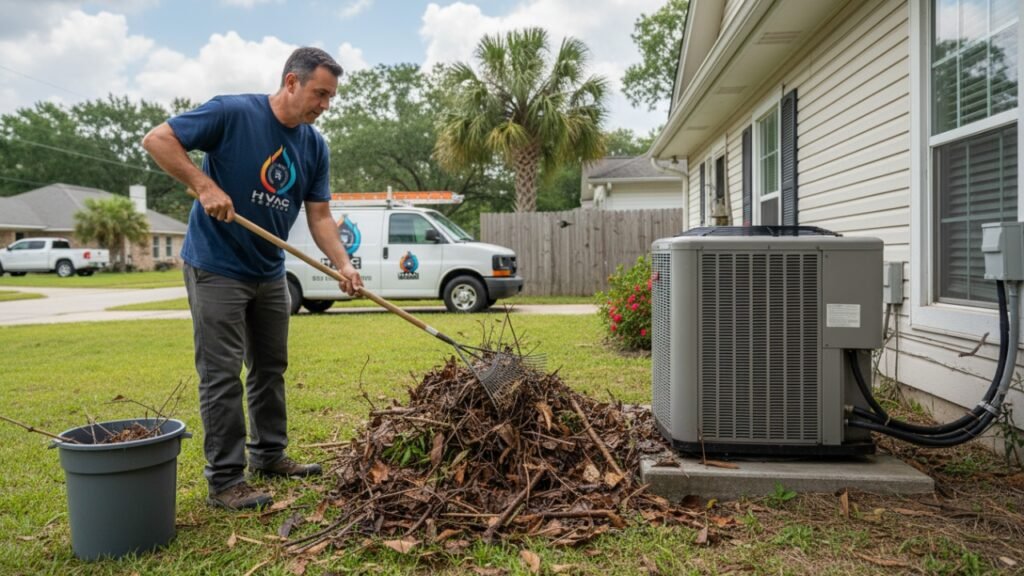
- Remove leaves, branches, toys, and lawn tools from around the unit so they can’t blow into the fan or fins.
- Keep at least 2–3 feet of clearance on all sides so air can flow freely and the unit doesn’t overheat.
- Trim nearby bushes or tree branches that might break and hit the unit during high winds.
- Secure or store loose patio furniture, buckets, or other objects that can become projectiles.
- Make sure the disconnect box and wiring are not loose or damaged, and arrange to have any repairs done before the storm.
A clean, open area around the condenser reduces the risk of physical damage and keeps the unit running more efficiently even in hot, humid conditions.
Step 3: Turn Off Power Safely Before the Storm
When a hurricane or severe storm is approaching, turning off the AC at the right time can protect the system from power surges and water damage.
Best practices:
- Turn the AC off at the thermostat so the system stops calling for cooling.
- If safe, turn off the outdoor disconnect or breaker for the AC unit before the storm arrives.
- Never operate the AC during flooding or heavy rain if the outdoor unit is sitting in standing water.
Turning off power helps prevent electrical damage from lightning‑related surges or erratic power cycling. However, never attempt to work on the outdoor disconnect or breaker panels during heavy rain or strong winds; wait until conditions are safe.
Step 4: Protect the Unit from Flooding (If Possible)
In low‑lying areas of New Orleans, Metairie, Kenner, Gretna, Marrero, Westwego, Harvey, and nearby communities, flood risk is a serious concern for outdoor AC units.
If you can:
- Raise the slab or platform so the base of the unit sits a few inches higher than surrounding ground.
- Keep the area around the unit sloped so water drains away instead of pooling against the electrical panel.
- If the unit sits in a high‑risk flood zone, consider relocating the condenser to a safer, higher location (if your home layout allows).
Avoid covering the outdoor unit with a plastic tarp directly over the grill; this can trap moisture, encourage rust, and may void the manufacturer’s warranty. In many cases, professional guidance on relocation or elevation is worth the investment.
Step 5: Use a Surge Protector or Safety Switch
Modern AC systems are packed with sensitive electronics, and power surges from lightning or grid recovery after an outage can fry control boards, capacitors, and thermostats.
To reduce this risk:
- Install a whole‑house surge protector or at least a dedicated AC surge protector at the main electrical panel.
- Some systems can also use a safety switch or time‑delay relay that prevents the compressor from restarting too quickly after a power outage.
These devices can’t eliminate all risk, but they significantly reduce the chance of AC breakdowns during hurricane season caused by electrical spikes.
Step 6: Post‑Storm Checks and When to Call a Technician

After a storm passes, your AC may look fine from the outside but still be damaged inside. A quick inspection is essential before you let it run continuously.
Basic checks:
- Look for visible damage, such as dented panels, bent fins, loose wiring, or water around the unit.
- If the outdoor unit has been submerged or surrounded by floodwater, do not turn it on. Contact a professional.
- Check that the breaker or disconnect hasn’t tripped and reset it only if the unit shows no obvious damage.
- Listen for unusual noises, weak airflow, or rooms that won’t cool properly.
If you notice any of these issues, call Zees Air Conditioning Inc for a post‑hurricane AC inspection. Attempting to run a damaged unit can turn a small repair into a major, expensive failure.
Step 7: Maintain Your AC Year‑Round, Not Just During Storms
A system that’s already struggling before a storm is far more likely to break down during hurricane season. Regular maintenance is your best year‑round defense.
Best practices:
- Change or clean the air filter regularly (every 30–90 days, depending on pets and usage).
- Schedule professional AC maintenance at least once a year, ideally before cooling season.
- Clean or replace dirty coils and drain lines to keep the system running efficiently.
- Seal or repair leaky ductwork so your AC doesn’t have to work harder than necessary.
A well‑maintained AC is more likely to survive rough conditions and recover faster after a storm.
Final Thoughts
Avoiding AC breakdowns during hurricane season isn’t about luck—it’s about preparation. Simple steps like scheduling a pre‑season inspection, clearing the outdoor area, securing the unit, and knowing when to turn power off can protect your system and keep repair costs down. In New Orleans, Metairie, Kenner, Gretna, Marrero, Westwego, Harvey, and the Gulf Coast, a well‑prepared AC can mean the difference between a hot, frustrating recovery and a home that stays cool and comfortable even after the storm passes.
If your AC in New Orleans, Metairie, Kenner, Gretna, Marrero, Westwego, Harvey, or nearby areas needs a hurricane‑season check‑up or repair, call Zees Air Conditioning Inc at (504) 912‑0490 or visit https://zeesairconditioning.com/. We’ll help you prepare your system so it can handle the storm and keep you comfortable all season long.
FAQs
Ideally, have your AC inspected and serviced a few weeks before the official start of hurricane season or before the first major storm threat. This gives you time to repair or replace worn parts, clean the system, and prepare the outdoor area.
No. You don’t need to turn the AC off for light rain or normal weather, but if a hurricane or severe storm is forecast, it’s wise to turn it off at the thermostat and, if safe, at the breaker. This helps protect the system from power surges and flood‑related damage.
Generally no. Tightly covering the outdoor unit can trap moisture, cause rust, and interfere with airflow and heat transfer. If you want to protect the unit, focus on clearing debris, securing loose panels, and considering elevation or relocation instead.
If the unit or nearby slab was submerged, do not turn the AC on. Turn off power at the breaker, wait for the area to dry, and call a professional like Zees Air Conditioning Inc for a safety inspection. Water can damage electrical components and create shock or fire risks.
Signs of storm‑related damage include strange noises, weak airflow, rooms not cooling, tripped breakers, visible water in the indoor unit or around the outdoor disconnect, or a musty smell. If you notice any of these, have a technician inspect the system.


