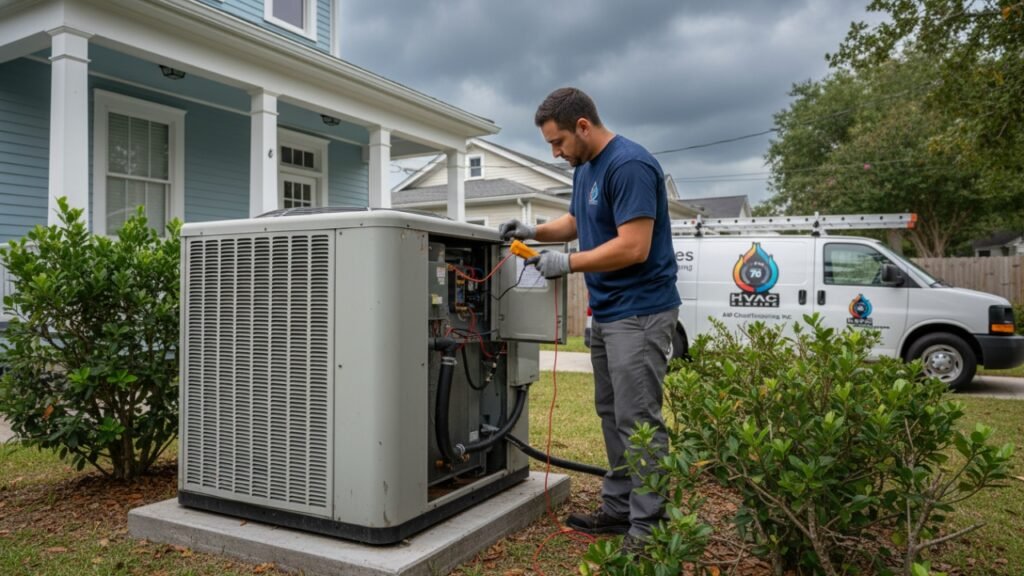
Hurricane season in the Gulf Coast can bring strong winds, power outages, heavy rain, and flooding that put your air conditioning system under serious stress. If you live in New Orleans, Metairie, Kenner, Gretna, Marrero, Westwego, Harvey, or surrounding areas, preparing your AC ahead of hurricane season helps protect the unit, keep repair costs down, and shorten downtime when storms hit. At Zees Air Conditioning Inc, we help homeowners get ready so their AC system is as safe and resilient as possible before the first big storm.
Why You Should Prepare Your AC Before Hurricane Season
Hurricanes and tropical storms can cause several problems for an outdoor AC unit:
- Heavy rain and flooding around the unit, risking water damage or electrical issues.
- High winds that can knock over loose panels, disconnect wiring, or throw debris into the condenser.
- Power surges and outages that can damage the compressor and control board.
- Standing water and humidity that can lead to rust, mold, and reduced efficiency later.
Taking a few simple steps to “hurricane‑proof” your AC doesn’t guarantee it will survive unscathed, but it greatly reduces the risk of damage and makes post‑storm repairs easier and faster.
6 Practical Steps to Prepare Your AC for Hurricane Season
1. Clear the Area Around the Outdoor Unit
A clean, clear space around the outdoor condenser is one of the easiest ways to prepare your AC for hurricane season.
- Remove leaves, branches, toys, and lawn equipment from the area.
- Keep at least 2–3 feet of clearance on all sides so air can flow freely.
- Trim nearby bushes or low branches that might break off and hit the unit during high winds.
A clear area prevents debris from smashing into the fins or fan and makes it easier to inspect the unit after the storm.
2. Secure or Remove Loose Panels and Covers
If your AC unit has loose panels, loose wiring covers, or unstable surrounding objects, they can become dangerous projectiles in hurricane‑force winds.
- Check that all access panels on the condenser are properly fastened.
- If the service panel is loose or rattling, contact a technician to tighten or repair it before hurricane season.
- Move any loose patio furniture, buckets, or tools that might blow into the unit during a storm.
Securing the unit’s surroundings reduces the chance of broken fins, dented casings, or other physical damage.
3. Inspect the Condenser for Signs of Damage or Wear
Before hurricane season, it’s a good idea to inspect the outdoor unit for signs of wear.
- Look for bent or crushed fins, rust spots, or loose parts.
- If the unit already has problems, such as a loud fan, leaks, or frequent repairs, consider basic maintenance or replacement before the storm hits.
- A well‑maintained AC is more likely to survive rough conditions than one that’s already struggling.
If you’re not comfortable inspecting the unit yourself, call Zees Air Conditioning Inc for a pre‑hurricane tune‑up and inspection.
4. Protect the Unit from Flooding (If Possible)

In low‑lying areas of New Orleans, Metairie, Kenner, Gretna, Marrero, Westwego, and Harvey, flooding can be a major concern for outdoor AC units.
- If your unit sits close to the ground, consider raising the slab or platform so the base is a few inches higher than normal.
- Clear the area around the unit so water can drain away easily and doesn’t pool against the electrical panel.
- If flooding is a serious risk, talk to a technician about relocating the unit to a safer, higher area if possible.
Avoid covering the unit with a plastic tarp directly over the grill; this can trap moisture and is not approved by all manufacturers.
5. Turn Off Power Before the Storm Arrives
When a hurricane or severe storm is approaching, protecting your AC from power surges is important.
- Turn off the AC at the thermostat.
- If safe, also turn off the circuit breaker or disconnect to the outdoor unit before the storm hits.
- This helps prevent electrical damage if lightning strikes or the power cuts out and comes back on erratically.
Never attempt to adjust the breaker or wiring during heavy rain or high winds. Wait until conditions are safe.
6. Plan for Post‑Storm AC Inspection and Service
After the storm passes, inspect your AC carefully before using it.
- Check for visible damage, such as dented panels, bent fins, or signs of water intrusion.
- If the unit is submerged or surrounded by floodwater, do not turn it on. Wait for a professional inspection.
- Call Zees Air Conditioning Inc for a post‑storm check, cleaning, and possible repairs so your system recovers faster and safely.
A quick inspection can prevent small issues from turning into big, expensive repairs later.
Final Thoughts
Preparing your AC for hurricane season is a smart way to protect your investment and keep your home comfortable even after storms pass. Simple steps like clearing debris, securing loose parts, protecting the unit from flooding, and turning off power before the storm can reduce the risk of damage and costly repairs. If you’re unsure how to prepare your AC or you live in a high‑risk area like New Orleans, Metairie, Kenner, Gretna, Marrero, Westwego, or Harvey, contact Zees Air Conditioning Inc for a pre‑season inspection and advice. A little preparation now can save you time, money, and stress when the next hurricane or tropical storm hits.
FAQs
Ideally, inspect and prepare your AC a few weeks before hurricane season officially begins or before the first storm threat appears. This gives you time to clean the area, tighten loose parts, and schedule any needed maintenance or repairs.
Most manufacturers and HVAC professionals do not recommend tightly covering the outdoor unit with a plastic tarp because it can trap moisture and cause rust or corrosion. If you want to protect the unit, focus on clearing the area, securing loose panels, and raising the unit above flood levels if possible.
If your AC unit sits in floodwater, do not turn it on. Turn off the power at the breaker and call a professional HVAC technician to inspect for water damage, electrical issues, and rust. Running a flooded unit can cause serious damage and safety hazards.
Yes. Taking steps like clearing debris, securing panels, and protecting the unit from standing water can reduce the chances of broken fins, clogged components, and water‑related damage. This often means smaller repairs or less downtime after the storm.
You don’t need to shut it off for every light rainstorm, but if a hurricane or severe storm with high winds and flooding is forecast, it’s wise to turn the AC off at the thermostat and, if safe, at the breaker. This helps protect against potential power surges and water‑related issues.
You should call a professional like Zees Air Conditioning Inc if your AC is already making noises, struggling to cool, leaking, or has not had a maintenance check in over a year. A pre‑season tune‑up and inspection can help ensure your AC is as strong and efficient as possible before hurricane season hits.


