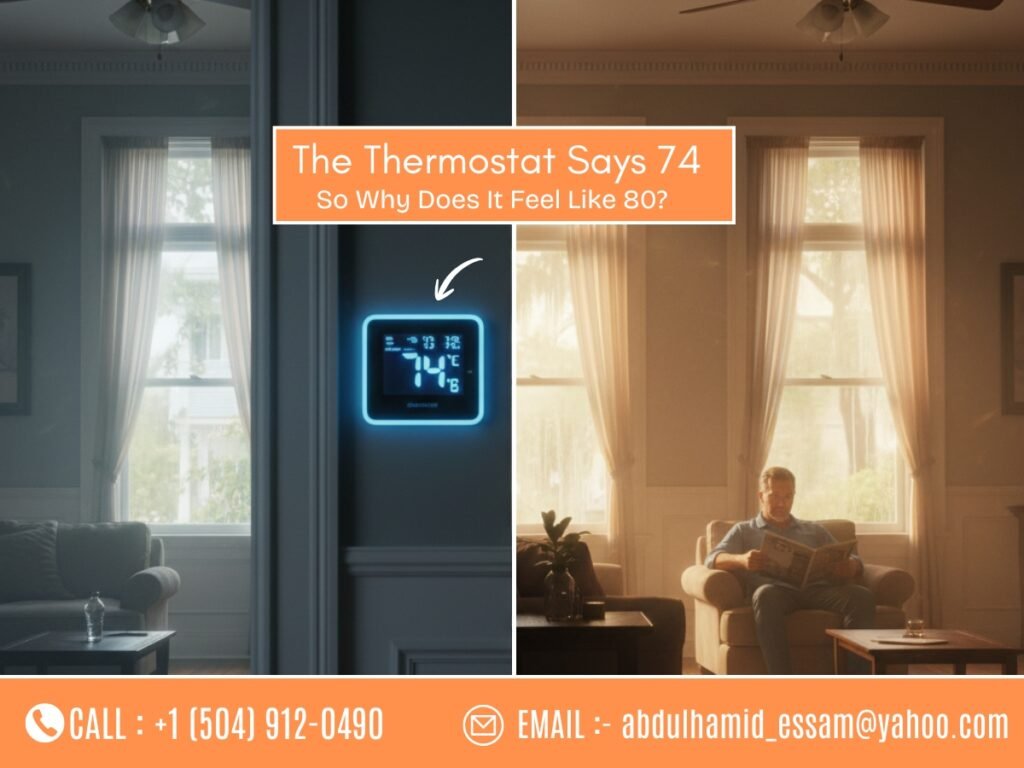
You glance at the thermostat and it reads 74°F — the same setting you’ve always used.
But instead of feeling cool and comfortable, your New Orleans home feels warm, sticky, and uncomfortable.
Many homeowners assume the AC is failing or that the thermostat is wrong. In reality, the temperature reading may be accurate — yet the comfort is not.
At Zees AirConditioning Inc, this is one of the most common concerns we hear from homeowners across the New Orleans metro area. And the truth is simple but surprising:
👉 Temperature alone does not determine comfort.
This guide explains why New Orleans homes feel hotter even at the same thermostat setting, how humidity and airflow play a major role, and what homeowners can do to restore real comfort — without constantly lowering the thermostat.
Temperature vs Comfort: Why the Thermostat Doesn’t Tell the Whole Story
A thermostat measures air temperature, not how that air actually feels on your skin.
Comfort is influenced by:
- Humidity levels
- Air movement
- Heat radiating from walls and ceilings
- Sun exposure
- Indoor moisture
In New Orleans, these factors are amplified by climate and home construction — which is why 74°F here doesn’t feel like 74°F in drier regions.
The Biggest Reason: High Humidity Makes Homes Feel Hotter
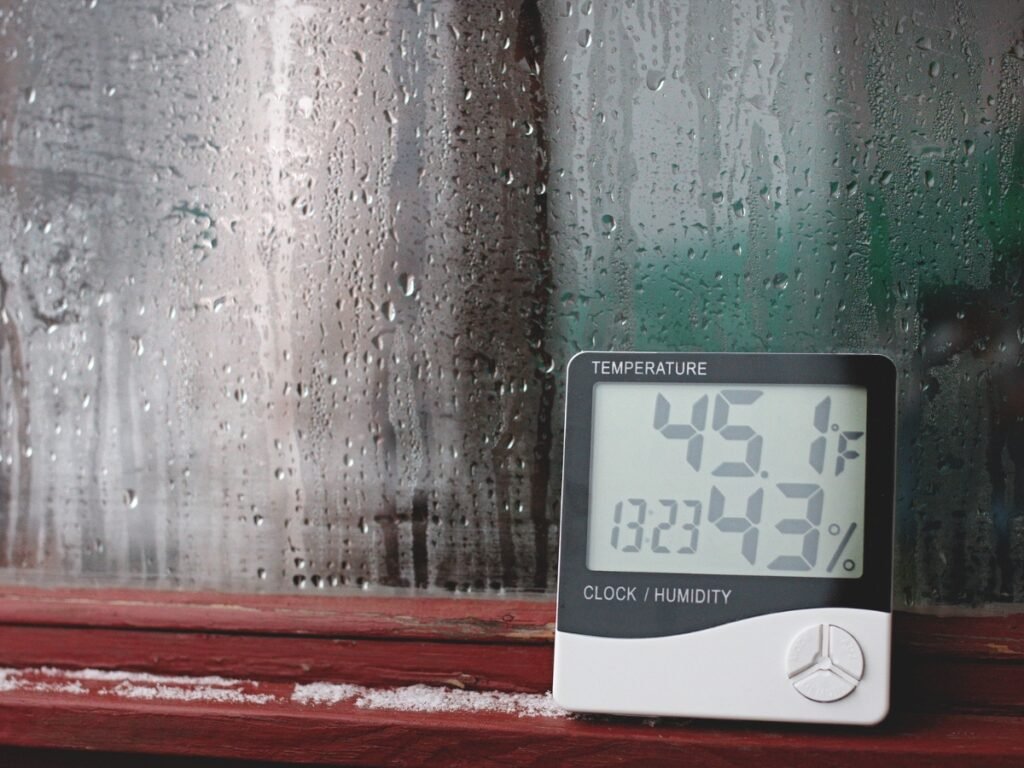
💧 Humidity Is the Comfort Killer
Humidity prevents sweat from evaporating from your skin — your body’s natural cooling mechanism. When indoor humidity is high, even cool air feels warm and heavy.
In New Orleans:
- Outdoor humidity often exceeds 70–90%
- Moisture constantly enters homes
- AC systems must work harder to remove it
If humidity control is compromised, your home will feel hotter — even when the thermostat says otherwise.
Indoor Heat Index: Why It Feels Warmer Than the Number
You’ve heard of the outdoor heat index — the “feels like” temperature.
The same concept applies indoors.
For example:
- 74°F with low humidity feels comfortable
- 74°F with high humidity can feel like 78–80°F
That difference explains why many homeowners lower thermostats unnecessarily, driving up energy bills without solving the real problem.
1. AC Systems Struggling to Remove Humidity
Your air conditioner is responsible for:
- Cooling air
- Removing moisture
When systems are:
- Dirty
- Poorly maintained
- Improperly sized
- Experiencing airflow problems
Humidity removal suffers — even if cooling still occurs.
At Zees AirConditioning Inc, we often find homes where temperature is fine, but moisture control HVAC issues are the real cause of discomfort.
2. Poor Airflow Makes Cool Air Feel Ineffective
Airflow plays a huge role in how cool a space feels.
When airflow is weak or uneven:
- Cool air doesn’t circulate properly
- Warm air pockets remain
- Rooms feel stuffy and stagnant
Even at the same thermostat setting, homes with poor airflow feel noticeably warmer.
3. Attic Heat Gain Radiates Into Living Spaces
In summer, New Orleans attics can reach 130–150°F.
Without proper insulation and ventilation:
- Heat radiates downward
- Ceilings warm the air below
- AC systems constantly fight incoming heat
This radiant heat makes rooms feel warmer, regardless of thermostat settings.
4. Older Homes Trap Heat and Moisture
Many New Orleans homes feature:
- Older construction
- Less insulation
- Gaps and air leaks
- Converted attics
These homes absorb and retain heat, especially during long hot days, increasing discomfort even when the AC runs.
5. Uneven Cooling Across the Home
If some rooms feel cooler than others:
- Air distribution is unbalanced
- Ductwork may be leaking
- System design may not match the home layout
Uneven cooling creates hot zones that affect overall comfort perception.
6. Thermostat Location Can Be Misleading
Thermostats are often installed:
- In hallways
- Away from direct sunlight
- On lower floors
This means:
- The thermostat may reach the set temperature
- Other areas of the home remain warmer
So while the thermostat is technically correct, comfort still suffers.
7. Solar Heat Gain Through Windows
Sun-facing windows — especially upstairs — can dramatically increase indoor heat.
Contributing factors include:
- Single-pane or older windows
- Lack of shading
- Direct afternoon sun
Solar heat gain raises room temperature and increases radiant warmth.
8. Dirty AC Components Reduce Comfort
Dirty evaporator coils and clogged filters:
- Reduce cooling efficiency
- Limit moisture removal
- Increase runtime
These issues develop slowly, which is why homeowners often don’t connect them to rising discomfort.
Why Lowering the Thermostat Doesn’t Fix the Problem
Many homeowners respond by setting the thermostat lower — 72°F, 70°F, even lower.
This:
- Increases energy bills
- Overworks the system
- Still doesn’t remove enough humidity
The home may cool slightly, but the sticky, uncomfortable feeling remains.
The New Orleans Climate Effect: Why This Problem Is So Common
New Orleans homes face:
- Constant humidity infiltration
- Long cooling seasons
- Frequent temperature swings
- Storm-driven moisture
These conditions make comfort issues far more noticeable than in drier climates.
Real Solutions That Restore Comfort (Without Freezing Your Home)
✔ Improve Humidity Control
Maintenance, coil cleaning, and proper airflow restore moisture removal.
✔ Airflow Optimization
Balancing ducts and vents improves circulation.
✔ Attic Insulation & Ventilation
Reducing heat gain lowers radiant warmth.
✔ Air Sealing
Preventing humid outdoor air from entering keeps indoor conditions stable.
✔ Professional HVAC Evaluation
Identifying the real cause avoids wasted upgrades.
At Zees AirConditioning Inc, we focus on comfort diagnostics, not just temperature readings.
Why HVAC Maintenance Plays a Major Role
Routine HVAC maintenance:
- Keeps coils clean
- Ensures proper airflow
- Maintains humidity control
- Prevents efficiency loss
Many comfort complaints disappear after a professional tune-up.
When a System Upgrade May Be Necessary
In some cases:
- Older systems lack advanced humidity control
- Improper sizing limits performance
- Duct designs are outdated
A system evaluation helps determine whether optimization or replacement delivers better ROI.
Why Local Expertise Matters

Generic HVAC advice doesn’t work in New Orleans.
Zees AirConditioning Inc understands:
- Louisiana humidity behavior
- Local home construction
- Seasonal comfort challenges
That expertise allows us to solve comfort problems others miss.
Final Thoughts
If your New Orleans home feels hotter at the same thermostat setting, your AC isn’t lying — your home environment is changing.
True comfort depends on:
- Humidity control
- Airflow balance
- Heat management
- System health
With the right diagnosis and solutions, you can feel cooler without lowering the thermostat or raising energy bills.
For real comfort solutions designed for Louisiana living, trust Zees AirConditioning Inc.
FAQs
High humidity and poor airflow make indoor air feel warmer than the actual temperature.
Yes. Humidity and long cooling seasons make comfort issues more noticeable here.
Usually no. It increases energy bills without addressing humidity or airflow.
Yes. Clean components and proper airflow restore cooling effectiveness.
A local expert like Zees AirConditioning Inc who understands humidity-driven comfort problems.