In our demanding Southeast Louisiana climate, a heating, ventilation, and air conditioning (HVAC) system faces a relentless workload. With grueling cooling marathons that run for eight to nine months out of the year followed by sudden winter temperature drops, systems across the Westbank are put under immense mechanical strain.
Over time, this intense operational burden leads to a highly predictable set of component failures. Understanding these common residential issues allows you to spot trouble early, protect your equipment, and know exactly when to call in professional support.
1. Severely Restricted Airflow and Clogged Air Filters
By far the most common, yet completely preventable, problem encountered in Gretna and New Orleans households is restricted system airflow. This is almost always triggered by a heavily fouled, neglected air filter.
The Domino Effect of Air Blockages
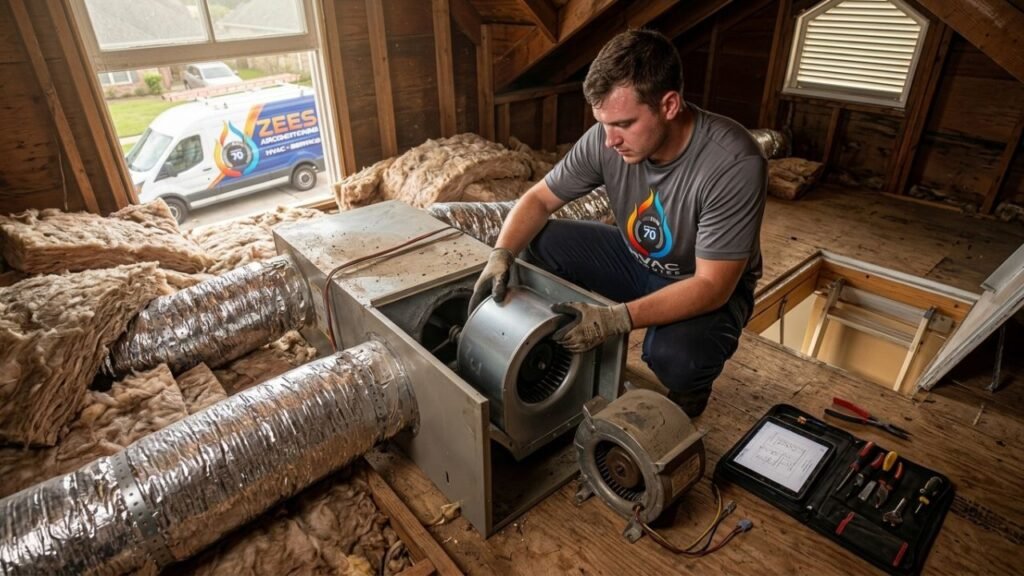
- Blown Blower Motors: When an air filter accumulates a thick layer of dust, pet hair, and airborne dander, the indoor blower fan must spin harder against extreme static pressure to circulate air. This sustained friction causes the motor to overheat, rapidly degrading its internal insulation until it burns out completely.
- Frozen Evaporator Coils: Your air conditioner relies on a steady stream of warm indoor air passing across the cold evaporator coil to drop the air’s temperature. If that airflow is choked off, the temperature of the coil rapidly drops below freezing, turning the condensation on the aluminum fins into a solid block of ice.
The Fix: Homeowners should inspect filters every 30 days. Swapping out a dirty filter is a simple task that instantly reduces strain on your system, keeps your utility bills manageable, and prevents the need for a premature emergency service call.
2. Leaking or Damaged Ductwork Systems
Your ductwork is the circulatory system of your home comfort setup. Unfortunately, structural duct problems plague a massive percentage of older and historic properties throughout the New Orleans metro area.
Over decades, traditional canvas duct tape dries out and loses its adhesion, causing flexible duct seams to completely separate. Furthermore, uninvited pests in attics or crawlspaces frequently chew through outer insulation layers, leaving massive holes in the air delivery lines.
When ductwork is compromised, your system ends up dumping massive volumes of expensive, conditioned air straight into your unconditioned attic space or crawlspace rather than your living areas. If your home suffers from persistent hot or cold spots, dusty rooms, or unexplainable energy bill spikes, it is highly likely you require a professional evaluation of your duct work. Sealing and insulating these pathways ensures that every cubic foot of air you pay to cool actually reaches your living room.
3. Failed Dual Run Capacitors and Electrical Component Wear
Our unpredictable regional summer thunderstorms and occasional grid fluctuations put immense stress on the delicate electrical components housed inside your outdoor condenser unit. The most vulnerable of these parts is the dual run capacitor.
The capacitor acts like a heavy-duty temporary battery, delivering the massive electrical boost required to jumpstart the compressor and the outdoor fan motor every time the thermostat calls for cooling. Prolonged exposure to high ambient heat waves combined with sudden voltage surges causes capacitors to degrade, lose their electrical storage capacity, or burst entirely.
If you hear a distinct clicking or humming noise coming from your outdoor unit but the fan refuses to spin, your capacitor has likely failed. Operating a system with a dead capacitor will rapidly destroy the compressor motor windings due to excessive amperage draw, transforming a simple electrical fix into a catastrophic, expensive mechanical breakdown.
4. Clogged Condensate Drain Lines and Water Leaks
Because summer humidity in New Orleans and Gretna is notoriously thick, your air conditioner must pull gallons of water out of your indoor air every single day through condensation. This moisture collects in an internal drain pan and flows away through a plastic PVC condensate line.
| HVAC Component | Common Failure Mode | Primary Operational Consequence |
| Condensate Drain Line | Algae blooms & bacterial slime blockages. | Water backs up, overflowing into ceilings and sheetrock. |
| Refrigerant Lines | Formicary copper corrosion pinhole leaks. | Loss of cooling capacity, system runs non-stop, iced coils. |
| Thermostat Wiring | Corroded terminals or dead batteries. | Total communication breakdown; system won’t activate. |
The warm, damp interior of a dark condensate drain line is the absolute perfect environment for heavy algae blooms and thick bacterial slime to thrive. Without regular flushing, this slime forms a dense plug that completely blocks water flow.
Once the line is blocked, water backs up and overflows the emergency pan boundaries. This leads directly to ruined sheetrock, sagging ceilings, warped flooring, and hazardous mold growth inside your living spaces.

5. Slow Refrigerant Leaks
An air conditioner does not “consume” or burn up refrigerant like a car consumes gasoline. The chemical refrigerant operates within a completely sealed, closed-loop copper system, constantly cycling between liquid and gas states to move heat out of your home.
If your system is low on refrigerant, it means you have a physical structural leak. In our coastal, humid climate, this is frequently caused by formicary corrosion—a process where microscopic organic acids present in indoor air slowly eat away at the copper tubing of your indoor evaporator coil, creating tiny pinhole leaks.
Symptoms of Low Refrigerant
- The air blowing from your supply vents feels lukewarm or room-temperature.
- Your system runs continuously 24/7 without ever satisfying the thermostat setting.
- Physical ice begins forming along the brass service valves on your outdoor unit.
Adding more Freon or Puron without finding and repairing the physical source of the leak is a temporary, illegal band-aid fix. The leak must be found, brazed, evacuated, and properly recharged by an EPA-certified professional to restore long-term system integrity.
6. Short Cycling and Thermostat Malfunctions
A healthy, properly calibrated HVAC unit should run for roughly 15 to 20 minutes per cycle to efficiently cool or heat your home while managing indoor humidity. If your system turns itself on and off every few minutes, it is trapped in a highly destructive process known as short cycling.
Short cycling can be triggered by a simple thermostat malfunction—such as a corroded wire terminal, a miscalibrated internal sensor, or low batteries. It can also point to a system that was severely oversized for the home’s square footage, cooling the air too quickly before it can remove moisture from the air.
Because the highest moment of mechanical wear occurs during the initial startup seconds when the compressor draws Locked Rotor Amps (LRA), short cycling accelerates system aging, spikes energy bills, and causes premature component failure.
Comprehensive HVAC Trouble-Shooting Check-List
Before you call a professional technician out to your property, complete these basic troubleshooting steps to rule out simple user errors:
- Verify Your Thermostat Settings: Ensure the system is explicitly set to “Cool” or “Heat” and that the fan switch is set to “Auto” rather than “On” (which runs the fan continuously even when no cooling is happening).
- Inspect the Circuit Breakers: Go to your home’s main electrical panel and check the dedicated double-pole circuit breakers for both the indoor air handler and the outdoor condenser. If a breaker has tripped, flip it fully to “Off” before snapping it back to “On.” Note: If it trips a second time, leave it off to prevent an electrical fire.
- Examine Your Air Filter: Pull the filter out and hold it up to a light source. If you cannot see any light passing through the pleats due to dust buildup, replace it immediately.
- Confirm Register Clearances: Walk through your home and ensure that heavy drapes, furniture, or rugs are not completely blocking your supply registers or return air grilles.
Summary: Proactive Maintenance is Your Best Defense
Your local heating and cooling equipment represents a massive financial investment. Ignoring minor performance shifts like strange noises, weak airflow, or slight utility bill increases always leads to significantly more expensive emergency repair bills down the road. Committing to regular filter changes, keeping your outdoor equipment clean, and paying close attention to your system’s baseline operation will keep your home comfortable all year long.
If your system is actively leaking water, short-cycling, blowing warm air during a heatwave, or making violent metallic sounds, do not wait for a complete system breakdown. The fully licensed, certified team of local comfort experts at Zees Air Conditioning Inc. is always ready to assist with fast, dependable diagnostics and expert care across Gretna and New Orleans.
We invite you to head directly to our Homepage to explore our complete lineup of residential comfort options, or reach out immediately to arrange an affordable, professional AC repair in New Orleans to restore your home’s indoor air quality and temperature balance today.
To see our customer reviews, find our physical location, or get turn-by-turn directions to our regional office, check out our official.
FAQs
Because of our high seasonal pollen, humidity, and river dust, you should check your filter every 30 days. While some filters claim to last 90 days, homes in Southeast Louisiana with pets, carpet, or allergy sufferers usually need a fresh filter every month to maintain proper airflow and keep utility bills down.
This is a classic sign of reduced system capacity or short cycling. When an AC system has a slow refrigerant leak or dirty coils, it struggles to reach the dew point needed to extract moisture. If the system drops the air temperature too fast without running full 15 to 20-minute cycles, it leaves your indoor air feeling sticky and clammy.
The intense humidity in our local area forces your system to extract up to 20 gallons of water daily. This warm, damp environment inside dark PVC drain lines allows algae blooms and bacterial slime to thrive. Without regular flushing, this slime forms a thick plug that causes water to overflow into your ceilings or floors.
Absolutely not. Ice accumulation indicates a serious problem—usually a severe airflow restriction (like a choked filter or failing blower motor) or a low refrigerant charge. If you notice any ice build-up, shut the system off immediately at the thermostat to protect the compressor, and schedule an inspection.
A loud click when starting up often means an electrical relay or contactor is failing. A continuous, loud buzzing sound typically points to a failing dual run capacitor that can no longer deliver the voltage required to run the fan or compressor. Turning off the unit quickly prevents total motor burnout.


