Living in Southeast Louisiana means your home’s air conditioner runs almost continuously for nine months out of the year. While scheduling regular professional check-ups is essential, what you do between those visits plays a massive role in preventing sudden system breakdowns. The extreme heat and relentless humidity of the Westbank can quickly push a neglected system past its breaking point.
Taking a proactive approach to your home comfort system ensures it operates at peak energy efficiency throughout the cooling season. By mastering a few straightforward, monthly preservation habits, you can dramatically lower your monthly utility costs, optimize your home’s humidity removal capabilities, and lower the risk of needing an emergency AC repair in New Orleans during the hottest stretches of July and August.

1. Commit to a Strict Filter Replacement Routine
The single most critical maintenance task a homeowner can perform is regularly swapping out the air filter. In our local climate, your system is constantly pulling in fine river dust, heavy seasonal oak pollen, pet dander, and airborne mold spores.
Why Filter Upkeep Crucial
- Preserves Unrestricted Airflow: A dirt-clogged filter chokes your system, forcing the indoor blower motor to work twice as hard to circulate air. This extra friction spikes your Entergy bill and can prematurely burn out the motor windings.
- Prevents Evaporator Coil Freeze-Ups: When airflow drops significantly, the temperature of your indoor evaporator coil drops below freezing. Condensate moisture on the coil instantly turns to a solid block of ice, cutting off all cooling performance and potentially causing extensive water damage when it melts.
Pro-Tip: Check your filter every 30 days. If you have indoor pets or suffer from severe allergies, swap it out monthly. Otherwise, do not let a standard pleated filter sit for more than 90 days.
2. Keep the Outdoor Condenser Unit Clean and Clear
Your outdoor condenser unit is responsible for rejecting the heat absorbed from inside your home. If the metallic cooling fins are caked in grime or blocked by vegetation, that heat gets trapped inside the system, causing head pressures to skyrocket.
- Clear the Perimeter: Maintain a minimum 24-inch clear radius around your outdoor unit. Cut back overgrowing vines, weeds, creeping grass, and low-hanging branches that block radial airflow.
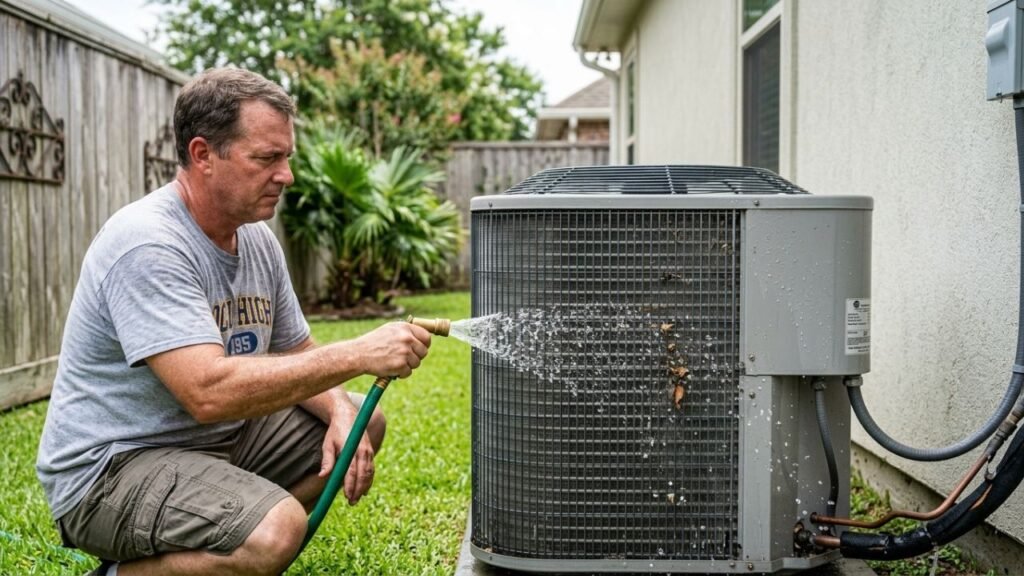
- Rinse the Coil Fins: Periodically use a gentle garden hose to wash away grass clippings, mud splatter, and river dust from the aluminum fins. Never use a high-pressure pressure washer, as the intense stream will instantly bend the delicate fins, permanently blocking airflow and requiring professional AC repair in New Orleans to straighten them out.
3. Manage the Condensate Drain Line Proactively
Because the humidity in New Orleans and Gretna is incredibly intense, a typical residential air conditioner pulls up to 20 gallons of water out of the indoor air every single day. This massive volume of moisture relies on a 3/4-inch PVC drain line to exit your home safely.
| Risk Factor | Impact on System | Preventions Step |
|---|---|---|
| Algae & Slime Accumulation | Creates thick blockages that back up water into the house. | Flush line with vinegar every 60 days. |
| Clogged Safety Switch | Shuts down the entire AC system completely without warning. | Regularly inspect the float switch assembly. |
| Overflowing Pan Dampness | Roof structural rot, ceiling drywall collapse, mold growth. | Ensure secondary emergency pan drains freely. |
To keep this system flowing freely, locate the access tee on your indoor condensate line and pour one cup of regular white vinegar down the drain every two months. This safe, natural solution breaks down algae blooms and bacterial slime before they form a solid plug that forces water to overflow into your ceilings or floors.
4. Protect Your Electrical System with Surge Protection
The frequent, severe afternoon thunderstorms that sweep across Gretna and the Westbank are notorious for causing sudden power drops, brownouts, and massive lightning power surges. Modern high-efficiency air conditioners rely on sensitive digital control boards and inverter drives that can be fried in a millisecond by an electrical spike.
While standard household surge strips protect your television, your heavy-duty cooling equipment requires dedicated protection. Ask your technician to install a hardwired, whole-house compressor surge protector directly onto your outdoor electrical disconnect box. This simple safety upgrade shields your expensive compressor motor and dual run capacitors from grid instability, saving you from a costly, unexpected AC repair in New Orleans.
5. Listen and Observe for Early Warning Performance Shifts
Your air conditioner will almost always warn you before it stops working completely. Developing an eye and ear for subtle changes in your system’s operational baseline can help you catch small component issues before they snowball into a total mechanical failure.
- Acoustic Irregularities: Take note of any new loud clicking, vibrating buzzes, or metallic screeching sounds when the outdoor unit cycles on. This often signals a failing run capacitor or a worn bearing inside the fan motor.
- The Temperature Split Test: Use a pocket thermometer to check the temperature of the air entering your return grille versus the cold air coming out of your supply vent. A healthy system should maintain a 16°F to 20°F temperature difference. If the split narrows, your system may be struggling with restricted airflow or a slow refrigerant leak.
Summary: Consistency Protects Your Investment

By dedicating just fifteen minutes every month to checking your filters, cleaning your outdoor condenser fins, and flushing your condensate lines, you actively defend your home against the brutal realities of our local climate. These basic practices keep your system running at peak energy efficiency and help prevent sudden, stressful breakdowns during the absolute hottest weeks of the summer.
Whenever your maintenance checks reveal an issue that requires advanced mechanical troubleshooting, the fully licensed and insured team at Zees Air Conditioning Inc. is here to back you up.
If your system is struggling to keep up with the summer heat, or if you want an expert technician to verify your system’s internal operating pressures, contact our office to Schedule Professional Residential AC Care Today to keep your home perfectly cool all year long.
FAQs
Every 30 days during the cooling season is recommended.
You can gently hose them, but deep cleaning should be done by professionals.
Changing air filters regularly is the highest-impact task.
Warm air, strange noises, water leaks, or higher bills are clear signs.
Yes. Our plans include priority scheduling and discounts on repairs.


