The average lifespan of an air conditioner is typically around 10 to 15 years, although some systems can last longer when they receive regular maintenance, proper installation, and timely repairs. The actual lifespan depends on several factors, including the type of AC unit, climate conditions, usage habits, installation quality, maintenance schedule, and how quickly problems are addressed.
For many homeowners, understanding how long an air conditioner should last helps with planning repairs, maintenance, or replacement decisions. An aging AC system may continue running, but it may become less efficient, require more frequent repairs, and struggle to maintain comfortable indoor temperatures.
This guide explains the average life expectancy of different air conditioning systems, signs that an AC may be reaching the end of its service life, and ways to extend the performance of your cooling system.
How Long Does an Air Conditioner Usually Last?
An air conditioner generally lasts between 10 and 15 years with normal use and proper care.
However, lifespan is not determined by age alone. Two air conditioners installed in the same year can have very different conditions depending on how they were used and maintained.
A well-maintained system may continue operating effectively beyond its expected range, while a poorly maintained unit may experience major problems much earlier.
Several factors influence AC lifespan:
→ Quality of the original installation
→ Frequency of professional maintenance
→ Local weather conditions
→ Amount of daily operation
→ Airflow and ductwork condition
→ Quality of repairs
→ Age and type of equipment
A professional HVAC technician can evaluate the condition of an older system and determine whether repair or replacement makes more sense.

Average Lifespan by Air Conditioner Type
Different types of cooling systems have different expected service lives.
Central Air Conditioning Systems
Central air conditioners are one of the most common cooling systems used in homes. A properly installed and maintained central AC system often lasts about 10 to 15 years.
The outdoor condenser unit, indoor evaporator coil, compressor, refrigerant system, and electrical components all affect how long the system remains reliable.
Regular maintenance can help identify problems before they damage major components.
Heat Pump Systems
Heat pumps provide both heating and cooling by transferring heat between indoor and outdoor spaces.
A heat pump usually has a similar lifespan to many central air conditioning systems, often around 10 to 15 years, depending on usage and maintenance.
Because heat pumps operate throughout different seasons, they may experience more operating hours than a cooling-only system. Regular inspections can help maintain performance.
Ductless Mini-Split Systems
Ductless mini-split air conditioners can often last around 15 to 20 years when properly installed and maintained.
Their lifespan depends on cleaning schedules, installation quality, indoor unit care, and how frequently the system operates.
What Factors Affect Air Conditioner Lifespan?
An air conditioner’s age is only one part of the equation. Several conditions can shorten or extend its service life.
1. Installation Quality
Proper installation is one of the most important factors affecting HVAC performance.
An incorrectly installed air conditioner may experience problems such as:
→ Poor airflow
→ Incorrect refrigerant levels
→ Frequent cycling
→ Reduced efficiency
→ Increased component wear
A system that is correctly sized and installed has a better chance of providing reliable performance over time.
2. Regular Maintenance
Routine maintenance helps keep an air conditioner operating properly.
Maintenance commonly includes:
→ Checking system operation
→ Inspecting components
→ Checking airflow
→ Cleaning important parts
→ Identifying possible issues early
Skipping maintenance can allow small problems to develop into expensive repairs.
3. Climate and Weather Conditions
Air conditioners in warmer climates often operate for longer periods throughout the year. Increased usage places additional demand on system components.
High temperatures, humidity, and continuous operation can contribute to faster wear if the system is not properly maintained.
4. Repair History
Frequent repairs can indicate that an air conditioner is approaching the end of its useful life.
A single repair does not necessarily mean replacement is needed. However, repeated issues involving major components may require evaluating whether continued repairs are financially practical.
5. System Usage
An air conditioner used heavily every day will generally experience more wear than a system used occasionally.
Factors that increase usage include:
→ Larger homes
→ Poor insulation
→ High indoor temperature settings
→ Long cooling seasons
→ Frequent system operation

Signs Your Air Conditioner May Need Replacement
An older AC system does not automatically need replacement. However, certain warning signs suggest that repair may no longer be the best option.
Increasing Repair Frequency
If your air conditioner requires repairs more often than before, the total repair costs may become difficult to justify.
A technician can inspect the system and explain whether repairing the current issue is practical.
Higher Energy Bills
Older air conditioners may lose efficiency over time.
If your cooling costs continue increasing without major changes in usage, the system may be working harder than it should.
Uneven Cooling
A properly working AC system should maintain consistent temperatures throughout the home.
Problems such as hot rooms, weak airflow, or inconsistent cooling may indicate issues with the equipment, ductwork, or system capacity.
Strange Noises
Unusual sounds such as grinding, rattling, or buzzing can indicate mechanical or electrical problems.
These issues should be checked before they lead to larger system failures.
System Age
Age alone does not determine replacement needs, but an older system with repeated problems may be a candidate for replacement.
Should You Repair or Replace an Old Air Conditioner?
The decision between repair and replacement depends on several factors.
Repair may make sense when:
→ The system is relatively new
→ The repair is minor
→ The equipment has been reliable
→ Replacement is not immediately necessary
Replacement may be worth considering when:
→ The system is older
→ Repairs are becoming frequent
→ Energy efficiency has declined
→ Major components have failed
→ Comfort problems continue
A professional HVAC evaluation can help homeowners understand their available options.
How to Extend the Life of Your Air Conditioner
Proper care can help maximize the useful life of an AC system.
Schedule Regular HVAC Maintenance
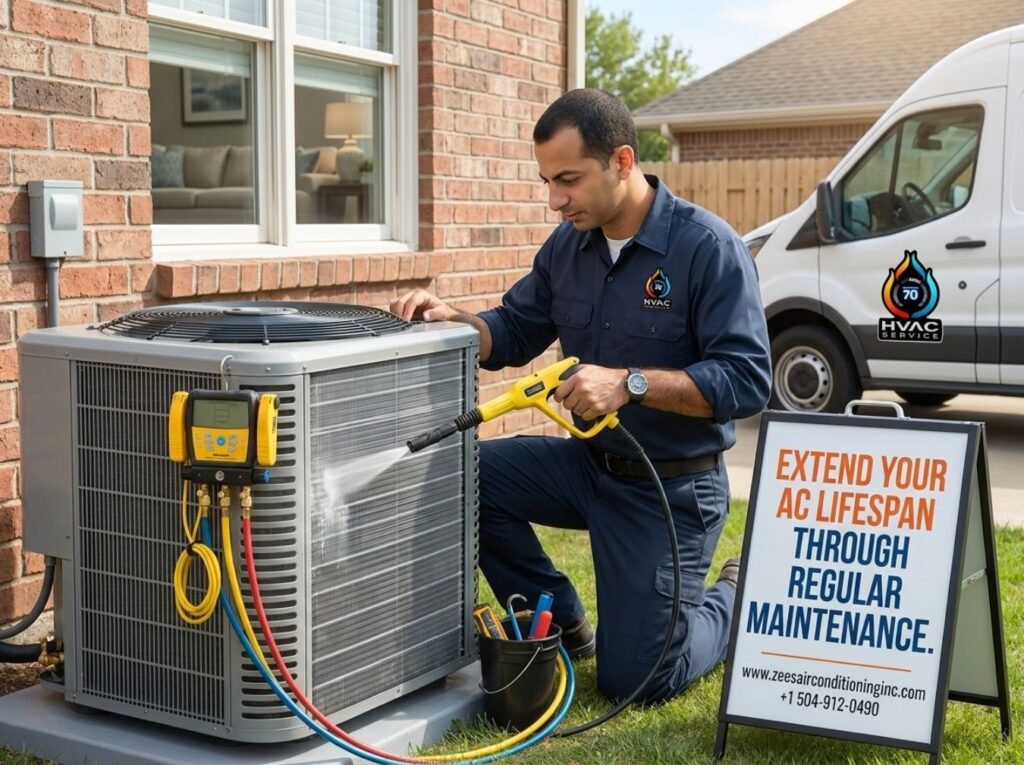
Routine maintenance allows technicians to inspect the system, identify developing issues, and keep important components operating correctly.
Replace Air Filters Regularly
A dirty air filter can restrict airflow and make the AC system work harder.
Changing filters according to system requirements helps maintain airflow and indoor comfort.
Keep Outdoor Units Clear
The outdoor condenser unit needs proper airflow to operate effectively.
Keep the area around the unit free from excessive debris, leaves, and other obstructions.
Address Problems Early
Ignoring small AC problems can lead to larger repairs.
If you notice unusual sounds, reduced cooling, or system changes, scheduling an inspection can help prevent additional damage.
Maintain Proper Indoor Conditions
Good insulation, sealed ductwork, and reasonable thermostat settings can reduce unnecessary strain on the cooling system.
How Do You Know It Is Time to Replace Your AC?
A replacement decision should consider the complete condition of the system rather than one factor alone.
A homeowner should consider an AC replacement evaluation if:
→ The system is near or beyond its expected lifespan
→ Repairs are becoming more frequent
→ Cooling performance has declined
→ Operating costs are increasing
→ The system no longer meets comfort needs
A newer system may provide improved reliability and better performance, but the right choice depends on the property’s needs and existing HVAC setup.
Frequently Asked Questions About Air Conditioner Lifespan
What is the average lifespan of an air conditioner?
The average lifespan of an air conditioner is generally about 10 to 15 years. Maintenance, installation quality, usage, and climate conditions can affect how long the system continues operating effectively.
Can an air conditioner last 20 years?
Some air conditioners can last 20 years, especially when they receive proper maintenance and have favorable operating conditions. However, many systems require replacement before reaching that age.
How often should an AC unit be maintained?
Most air conditioning systems benefit from regular professional maintenance. The exact schedule depends on the equipment, usage, and manufacturer recommendations.
Is it worth repairing a 15-year-old air conditioner?
It depends on the repair cost, system condition, and future reliability. A technician can help determine whether repair is practical or whether replacement should be considered.
What causes an air conditioner to fail early?
Common causes include poor installation, lack of maintenance, restricted airflow, electrical problems, refrigerant issues, and excessive system strain.
Does replacing an old AC save money?
A replacement may improve efficiency and reduce the need for frequent repairs, but savings depend on the condition of the existing system, the new equipment selected, and how the system is used.
Final Thoughts
An air conditioner typically lasts around 10 to 15 years, but maintenance and proper care play a major role in determining its actual service life.
Paying attention to warning signs, scheduling regular inspections, and addressing problems early can help protect your HVAC investment.
If your air conditioner is aging, experiencing repeated problems, or struggling to keep your home comfortable, a professional HVAC evaluation can help you decide whether repair or replacement is the better option.
FAQs
Typically 10–12 years due to heat and humidity.
Yes, regular maintenance can add several years.
Often yes — planned replacement avoids emergency costs.
They last longer when installed and maintained properly.
A local HVAC professional like Zees AirConditioning Inc.


