
In New Orleans, your home’s comfort depends heavily on one hidden system most homeowners rarely think about—ductwork. While your air conditioner or heater may get all the attention, leaking ductwork can quietly sabotage your comfort, increase energy bills, and harm indoor air quality.
Because of high humidity, older homes, and long cooling seasons, duct leaks are especially common in the New Orleans area. The problem? Most people don’t realize their ductwork is leaking until the damage is already done.
This guide will walk you through exactly what to do when your ductwork is leaking, how to spot the warning signs early, and how to protect your home before small leaks turn into expensive problems.
Why Leaking Ductwork Is a Big Deal in New Orleans
Ductwork is responsible for moving conditioned air from your HVAC system to every room. When it leaks, that air escapes into:
• Attics
• Crawl spaces
• Walls
• Basements
In New Orleans, these spaces are often hot, humid, and dusty, making duct leaks far more harmful than in drier climates.
Why It’s Worse Here
✔ High humidity causes duct seals to fail faster
✔ Older homes often have aging duct systems
✔ Long cooling seasons increase wear and tear
✔ Moisture encourages mold growth
A small leak today can become a major comfort and health issue tomorrow.
Common Signs Your Ductwork Is Leaking

Leaky ducts rarely announce themselves loudly—but they do leave clues.
Watch for These Warning Signs:
• Uneven temperatures between rooms
• Weak airflow from vents
• Higher-than-normal energy bills
• Rooms that never cool or heat properly
• Excessive dust around vents
• Musty or damp odors
If two or more of these are happening, duct leakage is very likely.
Step 1: Don’t Ignore the Problem
Many homeowners make the mistake of adjusting the thermostat instead of addressing the real issue.
Why This Makes Things Worse
• Your system works harder
• Energy waste increases
• Moisture builds up in ducts
• Small leaks expand over time
Turning the system up or down is a temporary fix that leads to bigger repair bills later.
Step 2: Identify Where Duct Leaks Commonly Occur
You don’t need to be an HVAC expert to understand where problems usually start.
Most Common Leak Points
• Duct joints and seams
• Connections near vents
• Areas wrapped with old tape
• Flexible duct bends
• Ducts in attics or crawl spaces
In New Orleans homes, attic ductwork is especially vulnerable due to heat and humidity.
Step 3: Check for Visible Clues at Home
While professional testing is best, homeowners can safely spot early clues.
Simple DIY Checks
✔ Feel for air leaks near vents
✔ Look for loose or disconnected ducts
✔ Check for sagging flexible ducts
✔ Notice dust streaks near registers
⚠️ Avoid crawling deep into tight attic spaces unless it’s safe—heat and insulation can be dangerous.
Step 4: Understand the Hidden Costs of Leaky Ducts
Leaking ductwork doesn’t just affect comfort—it hits your wallet.
Long-Term Costs Include:
• Up to 30% energy loss
• Higher monthly utility bills
• Increased HVAC repairs
• Shortened system lifespan
• Reduced home value
In a climate like New Orleans, where cooling runs most of the year, these losses add up fast.
Step 5: How Leaky Ducts Affect Indoor Air Quality
This is one of the most overlooked dangers.
What Leaking Ducts Pull In
• Humid air
• Dust and debris
• Mold spores
• Insulation particles
• Allergens
Instead of delivering clean, conditioned air, your ducts may be circulating polluted air throughout your home.
Step 6: Temporary Fixes vs. Real Solutions
Some homeowners try quick fixes—but not all repairs are equal.
Temporary Fixes (Short-Term)
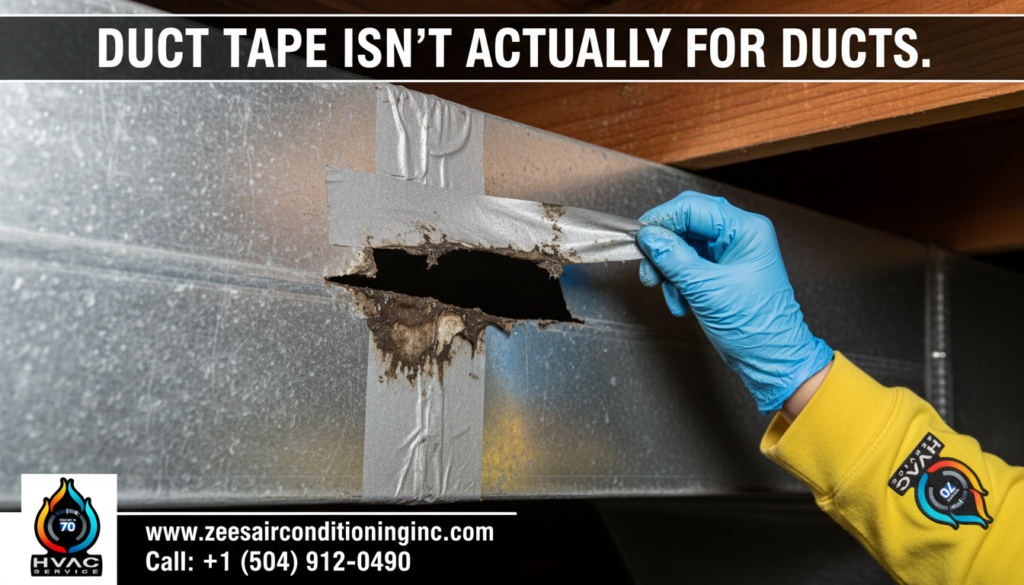
• Duct tape
• Sealant patches
• DIY wraps
These may slow leaks but won’t stop long-term damage, especially in humid environments.
Professional Solutions (Long-Term)
• Proper duct sealing
• Duct reinforcement
• Insulation upgrades
• Duct replacement (if needed)
A real solution addresses both air leakage and moisture protection.
Step 7: When to Call a Professional
Some duct issues are simply too complex—or risky—for DIY solutions.
Call a Professional If:
• Leaks are widespread
• Ducts are old or damaged
• Mold or moisture is present
• Energy bills keep rising
• Comfort problems persist
A professional inspection can pinpoint leaks using pressure testing and visual diagnostics.
How Duct Leakage Impacts HVAC Performance
Leaky ducts force your HVAC system to work harder than designed.
What Happens Internally
• Blower motor strains
• System cycles longer
• Components wear faster
• Repairs become more frequent
Fixing duct leaks often restores system efficiency without replacing equipment.
Leaky Ducts vs. Properly Sealed Ducts
| Feature | Leaky Ducts | Properly Sealed Ducts |
| Energy Efficiency | Low | High |
| Airflow | Weak & uneven | Balanced |
| Indoor Air Quality | Poor | Clean |
| Humidity Control | Unstable | Consistent |
| HVAC Lifespan | Shortened | Extended |
Step 8: Why New Orleans Homes Need Special Duct Care
New Orleans duct systems face challenges unique to the region.
Local Risk Factors
• Extreme attic heat
• Persistent moisture
• Older construction styles
• Hurricane-related shifting
This means duct repairs here must be climate-aware, not generic.
Step 9: Preventing Future Duct Leaks

Once repairs are made, prevention is key.
Smart Prevention Tips
✔ Schedule annual HVAC inspections
✔ Replace air filters regularly
✔ Seal ducts before peak summer
✔ Insulate attic ductwork
✔ Address humidity issues early
Preventive care costs far less than emergency repairs.
Step 10: The Comfort Difference You’ll Feel Immediately
Once duct leaks are fixed, homeowners often notice:
• Faster cooling and heating
• Even room temperatures
• Lower energy bills
• Quieter HVAC operation
• Cleaner indoor air
Many are surprised by how much comfort was being lost.
Final Thoughts
Leaking ductwork is one of the most common and costly hidden problems in New Orleans homes. Because ducts are out of sight, leaks often go unnoticed—until comfort, air quality, and energy costs suffer.
The good news? When caught early, duct leaks are highly fixable. Taking action now protects your HVAC system, improves indoor air quality, and keeps your home comfortable year-round.
If your home feels uneven, humid, or expensive to cool, your ductwork may be quietly leaking—and now you know exactly what to do.
FAQs
Very common, especially in older homes and attics exposed to heat and humidity.
Yes. Leaks pull in humid air, making indoor moisture harder to control.
No. It degrades quickly in heat and humidity.
Most repairs can be completed within a few hours.
Yes—many homeowners see noticeable savings within the first billing cycle.


