Hurricane season in the Gulf Coast isn’t just about boarding up windows and stocking bottled water; your HVAC system also needs a proper pre‑hurricane HVAC checklist to survive the wind, rain, power surges, and humidity. At Zees Air Conditioning Inc, we help homeowners in New Orleans, Metairie, Kenner, Gretna, Marrero, Westwego, Harvey, and nearby communities prepare their AC and heat pump systems so they’re more likely to restart safely after the storm and keep your home comfortable during recovery.
This Pre‑Hurricane HVAC Checklist gives you clear, practical steps you can follow in the days before a storm hits, tailored to the New Orleans–style climate and typical residential systems in the region.
1. Schedule a Pre‑Season HVAC Inspection
The first and most important step is to have your HVAC system professionally inspected before the storm window opens.
During a pre‑hurricane HVAC inspection, a technician will:
- Check the compressor, fan motor, and blower for wear, leaks, or loose parts.
- Test refrigerant level and look for low‑charge or leaks that can weaken the system.
- Inspect electrical connections, capacitors, and contactor for corrosion or loose wiring.
- Measure airflow and static pressure to catch duct or blower problems.
- Verify the thermostat and control system are working correctly.
If the system is already worn out, an inspection can help you decide whether a repair or replacement makes more sense before the storm hits.
2. Secure the Outdoor Unit and Clear the Area
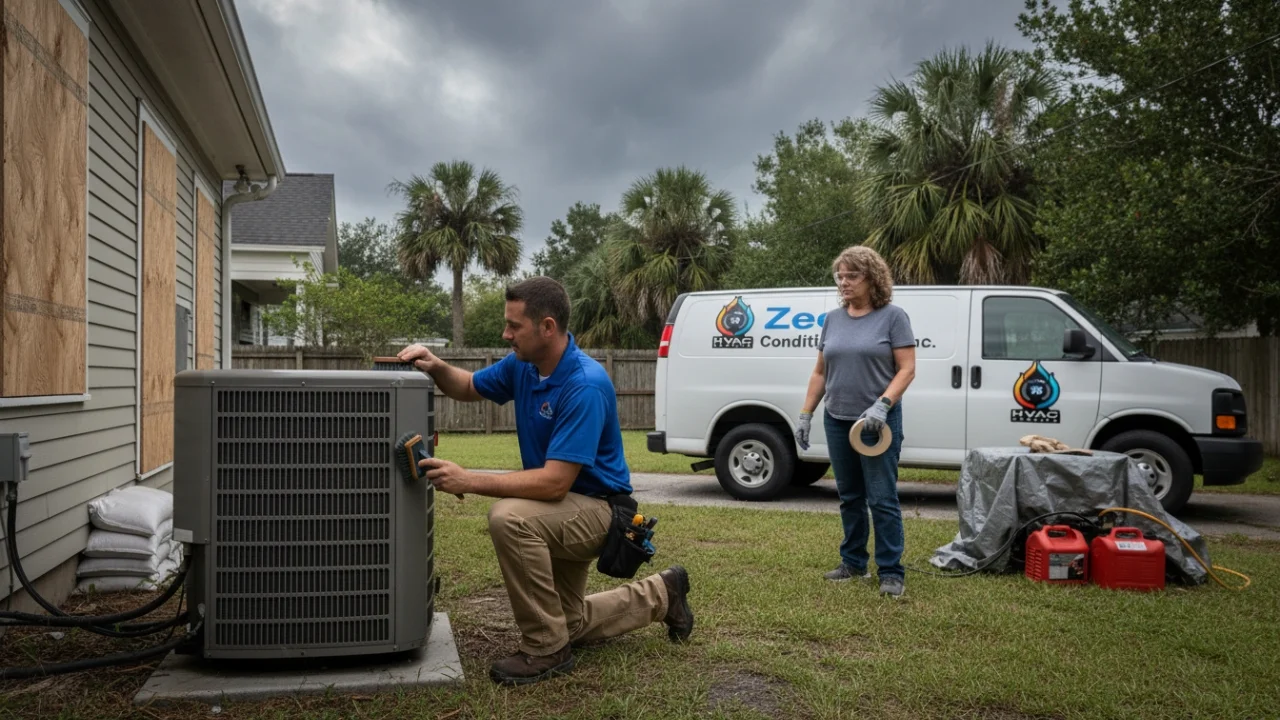
The outdoor condenser is the most exposed part of your system and is vulnerable to wind, debris, and water damage.
To protect it:
- Clear leaves, branches, toys, and lawn tools around the unit so they don’t blow into the fan.
- Keep at least 2–3 feet of clearance on all sides for airflow.
- Trim nearby bushes or tree branches that might break and hit the unit.
- Secure or store loose patio furniture, buckets, or tools that could become projectiles.
Some contractors use hurricane straps or tie‑downs to keep the condenser on its slab, but always check local guidance and manufacturer recommendations before adding hardware.
3. Turn Off Power Safely Before the Storm

When a hurricane or severe storm is approaching, turning off the AC at the right time helps protect it from power surges and water damage.
Best practices:
- Turn the AC off at the thermostat so the system stops calling for cooling.
- If safe, turn off the outdoor disconnect or breaker for the AC unit.
- Never operate the AC during flooding or heavy rain if the outdoor unit is sitting in standing water.
Turning off power protects the system from lightning‑related surges or erratic power cycling. Never attempt to work on the outdoor disconnect or breaker panels during heavy rain or strong winds; wait for safe conditions.
4. Protect the Unit from Flooding (If Possible)
In low‑lying areas of New Orleans, Metairie, Kenner, Gretna, Marrero, Westwego, Harvey, and nearby communities, flood risk is a serious concern.
If you can:
- Raise the slab or platform so the base of the unit sits a few inches higher than the ground.
- Keep the area around the unit sloped so water drains away instead of pooling against the electrical panel.
- Consider relocating the condenser to a safer, higher location if your home layout allows.
Avoid covering the outdoor unit with a plastic tarp directly over the grill, which can trap moisture and rust. Professional guidance on elevation or relocation is often worth the investment.
5. Install or Check Surge Protection
Modern AC systems contain sensitive electronics, and power surges from lightning or grid recovery after an outage can damage control boards, capacitors, and thermostats.
To reduce this risk:
- Install a whole‑house surge protector or at least a dedicated AC surge protector at the main panel.
- Some systems can use a time‑delay relay that prevents the compressor from restarting too quickly after a power outage.
These devices can’t eliminate all risk, but they significantly reduce the chance of HVAC failure during or after a storm.
6. Pre‑Cool Your Home Before the Storm
If power is likely to go out, you can use your AC to store cool air inside the house before the storm hits.
How to do it safely:
- Lower the thermostat a few degrees below your normal setting in the hours before the storm.
- Close windows, doors, and blinds to keep cool air in.
- Then turn the AC off at the thermostat and, if safe, at the breaker before the storm arrives.
This helps keep the house more comfortable if the power is out for hours or even days.
7. Prepare an Emergency HVAC Kit
It’s smart to keep a small emergency HVAC kit ready during hurricane season:
- Extra air filters for quick replacement after the storm.
- Basic tools (screwdriver, flashlight, voltage tester) for visual checks.
- Waterproof tarp for temporary covering (if safe and recommended in your area).
- Contact information for your HVAC company, like Zees Air Conditioning Inc, for fast post‑storm support.
This kit helps you respond quickly if the AC is damaged or needs inspection after the storm.
8. Post‑Storm HVAC Checks and When to Call a Technician
After a storm passes, don’t assume your AC is fine just because it turns on. A quick inspection is essential.
What to check:
- Visible damage to the outdoor unit, such as dented panels, bent fins, loose wiring, or water around the unit.
- If the outdoor unit has been submerged or surrounded by floodwater, do not turn it on.
- Make sure the breaker or disconnect hasn’t tripped.
- Listen for unusual noises, weak airflow, or rooms that won’t cool properly.
If you notice any of these issues, call Zees Air Conditioning Inc for a post‑hurricane HVAC inspection. Running a damaged unit can turn a small repair into a major, expensive failure.
Why Choose Zees Air Conditioning Inc?
Zees Air Conditioning Inc has over 15 years of experience serving homeowners in New Orleans, Metairie, Kenner, Gretna, Marrero, Westwego, Harvey, and nearby areas. We understand how the Gulf Coast climate and hurricane season affect HVAC systems and tailor our services to these conditions.
We offer:
- Pre‑hurricane HVAC inspections to catch wear and potential failure points.
- Emergency service for AC and heat pump breakdowns after storms.
- Regular maintenance plans to keep systems running smoothly year‑round.
- Clear, transparent pricing and honest communication about repair versus replacement.
Customers often say things like “They inspected our AC before the storm and caught a small issue we didn’t know about” and “Our AC stayed cool and quiet even after the big hurricane.” For pre‑hurricane HVAC checklist and storm‑season care, we aim to make your home as comfortable and resilient as possible.
Final Thoughts
A Pre‑Hurricane HVAC Checklist is a practical way to protect your home’s comfort and avoid costly repairs after a storm. Simple steps like scheduling a pre‑season inspection, clearing the outdoor area, securing the unit, and knowing when to turn power off can protect your system and keep repair costs down. In New Orleans, Metairie, Kenner, Gretna, Marrero, Westwego, Harvey, and the Gulf Coast, a well‑prepared HVAC system can mean the difference between a hot, frustrating recovery and a home that stays cool and comfortable even after the storm passes.
If your HVAC in New Orleans, Metairie, Kenner, Gretna, Marrero, Westwego, Harvey, or nearby areas needs a hurricane‑season check‑up or repair, call Zees Air Conditioning Inc at (504) 912‑0490 or visit https://zeesairconditioning.com/. We’ll help you prepare your system so it can handle the storm and keep you comfortable all season long.
FAQs
Start your pre‑hurricane HVAC checklist a few weeks before the official start of hurricane season or before the first major storm threat. This gives you time to repair or replace worn parts, clean the system, and prepare the outdoor area.
No. You don’t need to turn the AC off for light rain or normal weather, but if a hurricane or severe storm is forecast, it’s wise to turn it off at the thermostat and, if safe, at the breaker. This helps protect the system from power surges and flood‑related damage.
Generally, no. Tightly covering the outdoor unit can trap moisture, cause rust, and interfere with airflow and heat transfer. If you want to protect the unit, focus on clearing debris, securing loose panels, and considering elevation or relocation instead.
If the unit or nearby slab was submerged, do not turn the AC on. Turn off power at the breaker, wait for the area to dry, and call a professional like Zees Air Conditioning Inc for a safety inspection. Water can damage electrical components and create shock or fire risks.
Signs include strange noises, weak airflow, rooms not cooling, tripped breakers, visible water in the indoor unit or around the outdoor disconnect, or a musty smell. If you notice any of these, have a technician inspect the system.
While it can’t guarantee total protection, it greatly reduces the risk of failure. A well‑maintained system, clear area around the outdoor unit, proper power‑off procedures, and surge protection make AC and heat pump breakdowns during hurricane season much less likely.


