Flooding is one of the biggest threats to homes in New Orleans, Gretna, Harvey, Metairie, and across the Greater New Orleans area. Whether caused by hurricanes, tropical storms, heavy rainfall, or rising water from the Gulf or Lake Pontchartrain, floodwater can cause extensive damage — and your air conditioning system is especially vulnerable.
Many homeowners ask: Can flooding damage an air conditioning system? The answer is a clear yes. Even a small amount of water can destroy expensive components, create safety hazards, and leave you without cooling when you need it most.
In this comprehensive guide, the experts at Zees Air Conditioning Inc. explain exactly how flooding damages air conditioners, the warning signs to watch for, what you should (and shouldn’t) do after a flood, and how to protect your system.
How Flooding Damages Air Conditioning Systems

Air conditioners contain sensitive electrical and mechanical components that are not designed to come into contact with water. Floodwater is especially dangerous because it often contains:
- Contaminants, dirt, and debris
- Chemicals, sewage, and bacteria
- Salt (in coastal flooding)
- Mud and silt
When this water reaches your outdoor or indoor AC unit, it can cause multiple types of damage.
1. Electrical Component Failure
Water and electricity do not mix. Floodwater can short-circuit the control board, capacitors, contactors, transformers, and wiring. Once these components are damaged, the system may not turn on at all — or it may become a fire hazard.
2. Corrosion of Metal Parts
Even after the water recedes, moisture left behind causes rapid corrosion of the condenser coils, compressor housing, fan motor, and metal frames. In New Orleans’ humid climate, this corrosion accelerates quickly.
3. Contaminated Insulation and Drain Systems
If floodwater enters the indoor air handler or furnace, it can soak the insulation, contaminate the drain pan, and create mold growth inside the system.
4. Compressor Damage
The compressor is the most expensive part of an AC system. If water enters the outdoor unit and reaches the compressor, it can destroy the internal components, often requiring full unit replacement.
5. Fan Motor and Blower Motor Failure
Both the outdoor condenser fan motor and indoor blower motor can burn out if they attempt to run while wet or contaminated.
Table: Types of Flood Damage to Air Conditioning Systems
| Component Affected | Type of Damage | Typical Result | Repair Difficulty | Approximate Cost Range |
|---|---|---|---|---|
| Control Board | Short circuit / water damage | System won’t turn on | Medium | $400 – $900 |
| Compressor | Water intrusion / rust | Complete system failure | High | $1,500 – $3,500+ |
| Condenser Coils | Corrosion and debris buildup | Reduced efficiency, eventual failure | Medium | $600 – $1,500 |
| Fan Motor | Water damage / bearing failure | No airflow, overheating | Medium | $300 – $800 |
| Capacitors & Contactors | Electrical short | System won’t start | Low to Medium | $150 – $400 |
| Indoor Air Handler | Mold, wet insulation, contaminated drains | Poor air quality, odors, health risks | High | $800 – $2,500 |
| Wiring & Electrical | Short circuits and corrosion | Safety hazard, system failure | Medium | $200 – $700 |
Outdoor vs. Indoor AC Units: Which Is More Vulnerable?
Outdoor Condenser Unit
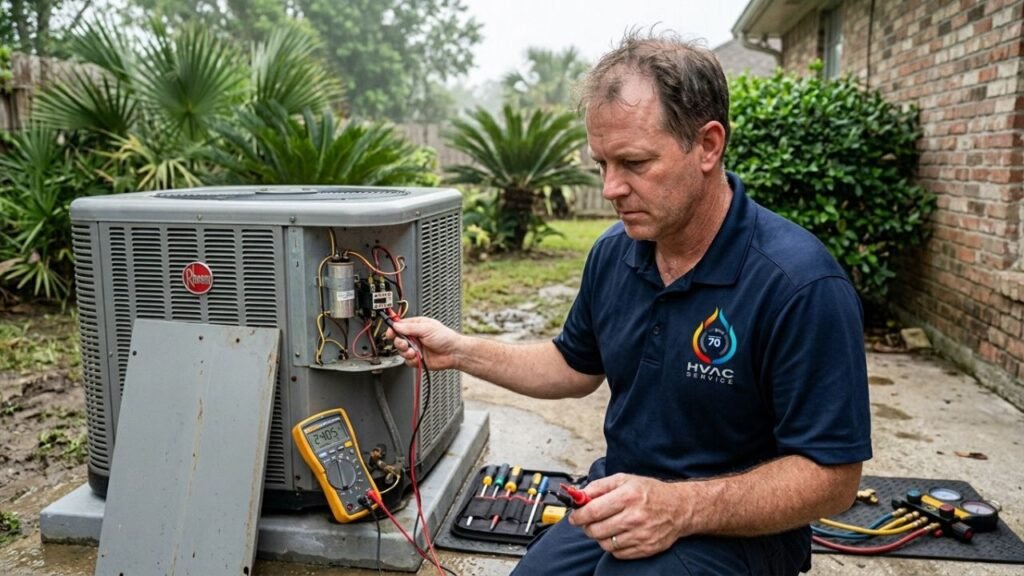
Most outdoor units sit on a concrete pad a few inches above ground. In areas prone to flooding (common in New Orleans and the Westbank), even 6–12 inches of water can submerge the bottom of the unit and damage electrical components.
Indoor Air Handler or Furnace
If floodwater enters your home and reaches the air handler (usually in the attic, closet, or garage), the damage can be even more severe. Contaminated water can ruin the blower, coils, insulation, and create long-term mold problems.
Warning Signs Your AC Was Damaged by Flooding

After a flood or heavy rain event, watch for these signs:
- The AC unit won’t turn on at all
- Burning or musty smell when the system runs
- Unusual noises (grinding, humming, or rattling)
- Water leaking from the indoor unit
- The system turns on but does not cool
- Error codes on the thermostat or control board
- Visible mud, dirt, or water marks on the outdoor unit
- Corrosion or rust appearing on metal parts
Important Safety Warning: Never attempt to turn on an AC system that has been submerged or exposed to floodwater. Doing so can cause electrical shock, fire, or further damage.
What to Do Immediately After Flooding
If your air conditioning system has been exposed to floodwater, follow these steps:
- Do not turn the system on — Leave the power off at the breaker.
- Document the damage — Take photos for insurance purposes.
- Remove debris carefully from around the outdoor unit (only if safe).
- Call a professional HVAC technician as soon as possible for a full inspection.
- Contact your insurance company to report the damage.
Attempting DIY repairs after flooding is extremely risky and can void warranties or create safety hazards.
Can a Flooded Air Conditioner Be Repaired?
In many cases, a flooded AC system can be repaired if the damage is limited. However, if the compressor, coils, or major electrical components are destroyed, full replacement is often more cost-effective.
A licensed technician will:
- Inspect all electrical components
- Check for water intrusion and corrosion
- Test the compressor and motors
- Clean contaminated parts
- Determine whether repair or replacement is the best option
Zees Air Conditioning Inc. has extensive experience handling flood-damaged AC systems in New Orleans and surrounding areas. Our technicians know how to safely assess and restore systems after flooding.
How to Protect Your AC System from Future Flooding
While you can’t prevent every flood, you can take steps to reduce risk:
- Elevate the outdoor unit — Install a higher concrete pad or platform (especially important in flood-prone zones).
- Install a surge protector — Protect against electrical surges that often accompany storms.
- Improve drainage around the outdoor unit so water flows away.
- Consider a flood-resistant pad or elevated platform designed for HVAC equipment.
- Schedule pre-hurricane season maintenance so your system is in good condition before storms arrive.
- Keep the area around the unit clear of debris and vegetation.
When to Call a Professional AC Repair Technician After Flooding
You should contact a professional immediately if:
- Your outdoor or indoor unit was submerged or surrounded by water
- The system was running during or after flooding
- You notice any of the warning signs listed earlier
- Your home flooded and the air handler may have been affected
Need emergency AC repair after flooding in New Orleans? Call Zees Air Conditioning Inc. at (504) 912-0490 or schedule service here: Zees Air Conditioning Inc. AC repair services in New Orleans.
We provide same-day and emergency service throughout New Orleans, Gretna, Harvey, Metairie, Marrero, and the Greater New Orleans area.
What Professional Flood Damage Inspection Includes
When our technicians inspect a flood-exposed AC system, they typically:
- Perform a complete electrical safety check
- Inspect the compressor, coils, fan motor, and control board
- Look for signs of contamination and corrosion
- Clean or replace damaged components
- Test the system thoroughly before restarting
- Advise on elevation or protection upgrades for the future
The Cost of Ignoring Flood Damage
Ignoring flood damage can lead to:
- Complete system failure
- Mold growth and indoor air quality problems
- Electrical hazards
- Higher long-term repair or replacement costs
- Voided manufacturer warranties
Prompt professional inspection after flooding is always the safer and more cost-effective choice.
Protect Your AC System from Flood Damage

Flooding can cause serious and expensive damage to air conditioning systems. In a city like New Orleans, where heavy rains and storms are common, taking proactive steps and responding quickly after flooding is essential.
If your AC unit has been exposed to floodwater or you want expert advice on protecting your system, don’t wait.
Contact the experienced team at Zees Air Conditioning Inc. for professional AC repair in New Orleans.
Call (504) 912-0490 today or book your service through our AC repair page: Zees Air Conditioning Inc. AC repair services in New Orleans.
We proudly serve New Orleans, Gretna, Harvey, Metairie, Marrero, and surrounding areas with fast, reliable, and honest service — including emergency response after storms and flooding.
Stay safe, stay cool, and protect your investment.
FAQs
Yes. Even a few inches of standing water can damage electrical components and cause corrosion.
No. Moisture can remain inside components and cause delayed failures or safety issues. Always have it professionally inspected.
It depends on your policy. Standard homeowners insurance usually does not cover flood damage — you typically need separate flood insurance. Check with your provider.
Call as soon as it is safe to do so. The sooner the system is inspected, the better the chance of successful repair.
Yes. Contaminated water can lead to mold growth inside the air handler, coils, and ductwork, which can affect indoor air quality and health.
Not always. Many systems can be repaired. A professional inspection will determine the most cost-effective option.

