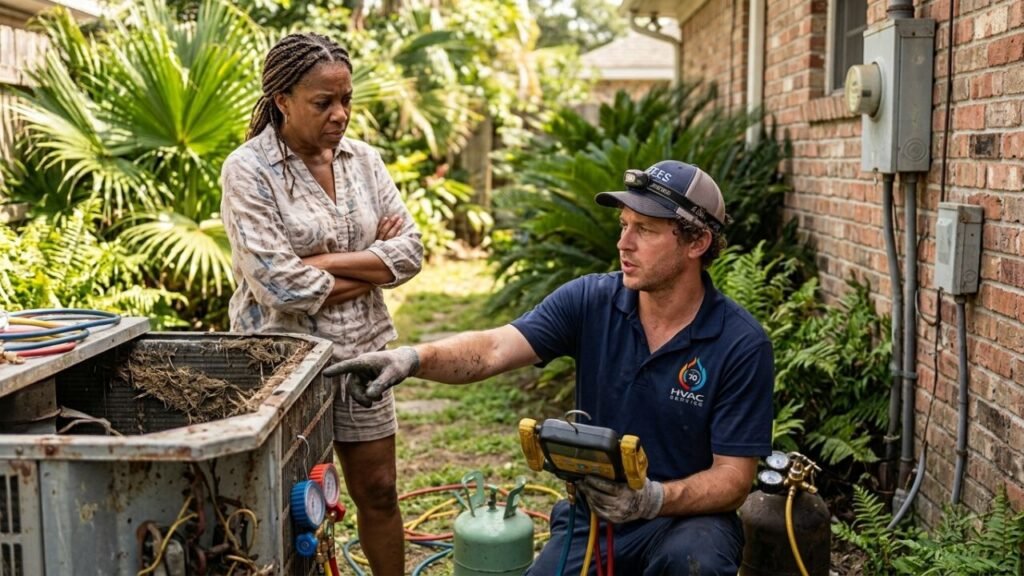
If your air conditioner is running but your home in New Orleans, Gretna, Harvey, Metairie, or the Westbank is not cooling like it used to, or your electric bill has suddenly skyrocketed, a dirty AC condenser coil is often the hidden culprit.
In the humid, pollen-heavy climate of Southeast Louisiana, outdoor condenser coils collect dirt, grass clippings, leaves, salt air, and debris faster than most homeowners realize. What starts as a thin layer of grime can quickly turn into a major efficiency killer that strains your entire system and leads to expensive repairs or premature failure.
At Zees AirConditioning Inc., we see this problem every summer. A neglected condenser coil does not just make your AC work harder. It can destroy your compressor, the most expensive part of your system. The good news is that catching and fixing a dirty condenser coil early can restore comfort, slash energy costs, and extend the life of your equipment.
In this comprehensive guide, our New Orleans HVAC experts explain exactly what happens when your AC condenser coil becomes dirty, the warning signs, the mechanical damage it causes, how to clean it safely, and when it is time to call professionals or consider a new high-efficiency system through professional AC installation in New Orleans.
What Is an AC Condenser Coil and Why Does It Get Dirty So Fast in New Orleans?

The condenser coil is the outdoor radiator of your air conditioning system. It releases the heat that was absorbed from inside your home into the outside air. Refrigerant flows through the coils while a large fan pulls air across the aluminum fins to dissipate that heat.
In New Orleans and surrounding areas, several local factors make condenser coils dirty very quickly:
- High humidity combined with pollen, mold spores, and tree debris
- Grass clippings from frequent lawn mowing
- Salt air from nearby coastal areas
- Dust, construction particles, and storm debris after hurricanes or heavy rains
- Pet dander and outdoor pollutants
Even a thin coating of dirt acts like an insulating blanket. It blocks airflow and prevents proper heat transfer. What should be a clean, efficient heat-exchange surface becomes a clogged barrier.
What Actually Happens When Your Condenser Coil Becomes Dirty?
Here is the step-by-step mechanical damage that occurs:
- Reduced Airflow Across the Coil Dirt and debris clog the spaces between the fins. The outdoor fan has to work harder to pull air through the restricted coil.
- Poor Heat Rejection The refrigerant cannot release heat effectively. Head pressure rises dramatically.
- Compressor Overworks The compressor has to pump against much higher pressure. It draws more electricity, runs hotter, and experiences increased mechanical stress.
- Higher Energy Consumption Your AC can use 20 to 30 percent more electricity just to maintain the same indoor temperature. Many New Orleans homeowners notice their summer bills jump significantly.
- Compressor Overheating and Failure Sustained high head pressure causes the compressor to overheat. Thermal overload protectors trip repeatedly. Eventually, the compressor seizes or burns out. A repair often costs $1,500 to $3,000 or more.
- System Short Cycling or Complete Shutdown Safety switches shut the system down to protect the compressor. You may experience the AC turning on and off every few minutes or refusing to run at all during peak afternoon heat.
- Reduced Dehumidification and Indoor Comfort Because the system is struggling, it does not remove humidity properly. Your home feels sticky and uncomfortable even when the temperature reading looks okay.
- Potential Secondary Damage High pressure can damage other components like the reversing valve on heat pumps, capacitors, and fan motors. In extreme cases, liquid refrigerant can slug back into the compressor and destroy it.
A dirty condenser coil does not just make your AC less effective. It actively shortens the lifespan of your entire system.
Warning Signs Your AC Condenser Coil Is Dirty
Watch for these symptoms, especially during New Orleans long, hot summers:
- AC runs constantly but never reaches the set temperature
- Noticeably higher electric bills with no change in usage
- Warm air coming from vents even when AC is running
- Outdoor unit making louder or unusual noises
- System short cycling (turns on and off frequently)
- Ice forming on the refrigerant lines or indoor coil in some cases
- Burning smell or hot air around the outdoor unit
- Error codes or the system shutting down on high-pressure safety
If you notice several of these signs after a pollen-heavy spring or recent storms, your condenser coil is very likely the problem.
Impact of a Dirty Condenser Coil on Your AC System
| Condition | Clean Coil (Normal) | Dirty Coil (Neglected) | Potential Cost Impact |
|---|---|---|---|
| Energy Efficiency | Rated SEER achieved | 20 to 40 percent efficiency loss | Higher monthly electric bills |
| Head Pressure | Normal range | Significantly elevated | Compressor strain |
| Compressor Lifespan | 12 to 15 plus years | Reduced by several years | Expensive replacement |
| Cooling Performance | Fast, consistent cooling | Weak or inconsistent | Discomfort and higher runtime |
| System Shutdowns | Rare | Frequent high-pressure trips | Multiple service calls |
| Indoor Humidity | Properly controlled | Higher humidity, sticky feeling | Discomfort and potential mold risk |
How Much Does a Dirty Condenser Coil Cost You in New Orleans?
Homeowners often underestimate the financial impact:
- Energy waste: A moderately dirty coil can add a significant percentage to your cooling costs during peak summer months.
- Repair bills: One compressor failure caused by years of neglected coils can cost more than many professional cleanings.
- Early replacement: Systems that run with dirty coils often need full replacement years earlier than well-maintained units.
Many families in the Greater New Orleans area spend extra money every summer simply because their outdoor coil has never been properly cleaned.
Can You Clean a Dirty Condenser Coil Yourself?
Yes, but with important safety rules and limitations.
DIY Condenser Coil Cleaning Steps (Basic Maintenance):
- Turn off power to the outdoor unit at both the thermostat and the disconnect box.
- Remove any large debris such as leaves or grass by hand or with a soft brush.
- Use a garden hose with a gentle spray nozzle. Spray from the inside out, opposite the direction of normal airflow, to push dirt out.
- For stubborn buildup, use a foaming no-rinse coil cleaner specifically made for condenser coils. Let it dwell, then rinse thoroughly.
- Straighten any bent fins with a fin comb.
- Let the unit dry completely before restoring power.
Important Warnings:
- Never use a pressure washer. It can bend fins and damage the coil.
- Avoid harsh household cleaners or bleach.
- Do not attempt to clean if you are uncomfortable working around electricity.
- If the coil is heavily caked or the fins are damaged, professional service is strongly recommended.
A thorough professional cleaning with the right chemicals and equipment usually takes less than two hours and restores most of the lost efficiency.
When DIY Is Not Enough. Call Zees AirConditioning Inc.
If your system is still not cooling properly after basic cleaning, has been running with a dirty coil for years, or you are uncomfortable performing maintenance yourself, it is time to call professionals.
Our technicians at Zees AirConditioning Inc. perform deep condenser coil cleaning using commercial-grade foaming cleaners and proper low-pressure rinsing techniques. We also inspect the entire system for hidden damage caused by high head pressure.
In cases where years of neglect have already damaged the compressor or other major components, or if your system is older and inefficient, we can help you explore a complete upgrade through professional AC installation in New Orleans. New high-SEER units with variable-speed technology can dramatically reduce your energy bills while providing superior comfort and humidity control.
Prevention: How to Keep Your Condenser Coil Clean Longer
- Schedule annual professional maintenance before summer, ideally in spring
- Keep at least two feet of clearance around the outdoor unit. No plants, mulch, or storage against it
- Trim grass and shrubs so clippings do not get sucked into the coil
- Rinse the coil gently with a hose every four to six weeks during heavy pollen or grass-cutting season
- Consider installing a coil guard or screen with professional installation recommended
- Have your system checked after major storms or hurricanes
Regular maintenance by Zees AirConditioning Inc. is the single best way to prevent dirty condenser coil problems and protect your investment.
Cost of Professional Condenser Coil Cleaning vs. Ignoring the Problem
| Service | Average Cost in New Orleans Area | Long-Term Benefit |
|---|---|---|
| Professional Condenser Cleaning | $125 to $250 | Restores efficiency and prevents compressor failure |
| Compressor Replacement | $1,800 to $3,500 | Only needed when damage is already done |
| Full System Replacement (older unit) | $4,500 to $9,000 plus | New efficiency and warranty |
Preventive cleaning is almost always the smartest financial decision.

Do Not Let a Dirty Condenser Coil Ruin Your Summer Comfort
A dirty AC condenser coil is one of the most common yet preventable causes of poor cooling, high energy bills, and premature system failure in New Orleans homes. The longer you ignore it, the more expensive the consequences become.
If your AC is not performing the way it should, do not wait for a complete breakdown during the next heatwave.
Contact Zees AirConditioning Inc. today for expert condenser coil cleaning, full system diagnostics, and honest recommendations. We offer same-day service and 24/7 emergency AC repair throughout New Orleans, Gretna, Harvey, Metairie, Marrero, and the entire Greater New Orleans area.
Call us now at (504) 912-0490 Our office is at 705 Wright Ave, Gretna, LA 70056 Email: Zaky@zeesairconditioning.com
Whether you need a thorough coil cleaning or are ready to upgrade to a new energy-efficient system, our licensed team (Louisiana Mechanical License 79676) is here to help you stay cool and comfortable.
Learn more about our professional AC installation in New Orleans and how a new high-efficiency system can save you money for years to come.
Stay cool, New Orleans, and keep those coils clean.
FAQs
At minimum once per year professionally. In high-pollen or heavy grass areas, a gentle rinse every four to six weeks during summer helps.
Yes. High head pressure will eventually trip safety switches or destroy the compressor.
The unit should feel warm, but if it is excessively hot to the touch or the fan is struggling, the coil is likely restricted.
Often yes. A clean coil allows the system to run longer cycles and remove more moisture.
Yes, but that requires a different process and is usually done during professional maintenance.
Most jobs are completed in under two hours.


